














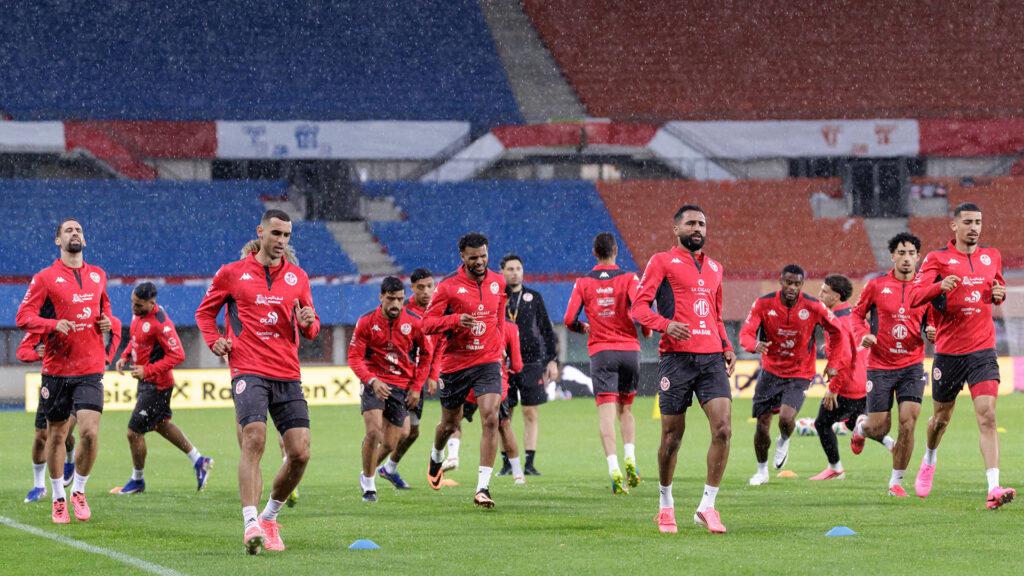
The Austria national team will host Tunisia at 20:45 local time on May 31 at the Ernst Happel Stadion in Vienna. On paper, this is an International Friendly, but for both sides it is one of the few live tests before the World Cup kicks off—the scoreline may not be the only measure, but what happens on the pitch will go straight into each team’s preparation notes.
Match Background and Rankings Snapshot
Hosts Austria sit 24th in the FIFA rankings on 1,593.45 points, unchanged from the previous update; visitors Tunisia are 44th on 1,483.05 points, up three places. Twenty places separate them on paper, giving the home side the edge, but friendlies have long been a stage for rotation and trial line-ups—the ranking gap may not fully show over 90 minutes.
Head coach Ralf Rangnick will oversee a full home rehearsal for Austria; Tunisia, led by Sabri Lamouchi, travel to test formation switches and personnel combinations on the road. Both sides share the same goal: resolve as many unknowns as possible in Vienna before the World Cup proper gets underway.
Venue Setup and Matchday Information
The match is scheduled for Sunday, with kick-off at 20:45 CEST (18:45 UTC). The stadium holds 50,865 and is one of Austria’s regular venues for top-level international fixtures. At major events, transport links, security screening and zoned entry are especially critical—the home organisers must keep crowd flow clear and avoid bottlenecks during pre-match peak periods.
From a safety and service perspective, a friendly carries no points pressure, but with the World Cup approaching, attention on the ground will be higher. Organisers typically deploy standard measures at turnstiles, concourse access points and medical stations; supporters should note the official entry times and prohibited-items list to avoid delays caused by unfamiliarity with the process. The starting line-ups have not been finalised and are expected to be announced close to kick-off; both those in the stadium and watching remotely should rely on official information.
Tactics: Rotation and Combination Tests
The value of a friendly often lies in who plays and how they play. Rangnick’s side can use home advantage to test transition efficiency under a high press, and how different midfield pairings affect ball progression; the Tunisian camp, meanwhile, needs to see whether their passing lines out from the back remain stable when their away-day rhythm is squeezed and the defensive line drops deeper.
Both teams are likely to manage minutes, bringing starters and substitutes on at different stages. For Austria, a home run-out is a good chance to assess attacking width and set-piece deployment; Tunisia will place greater emphasis on managing fitness on the road—after a long away trip, recovery cycles and bench depth will directly affect the quality of second-half duels. On the technical side, watch Austria’s pressing triggers in the final third and Tunisia’s success rate on the first pass after winning possession—these metrics say more about World Cup readiness than the result alone.
Market Signals and What to Watch
Pre-match 1X2 markets lean towards the hosts: Austria to win at around 12/25, the draw at 31/10, and Tunisia at 21/4. On the Asian handicap, Austria -1 is roughly 4/5, with Tunisia +1 at 1/1. The numbers underline home advantage on paper, but rotation in a friendly widens the scope for upsets; treat the odds as a guide only, as they may still move before kick-off.
When watching, keep an eye on substitution timing and the corresponding formation changes on both sides, set-piece roles in attack and defense, and how effectively substitutes perform in key duels. Whatever the result, both teams will head into the World Cup cycle with a clearer roster and tactical blueprint—who has locked down a starting spot and who still has work to do often becomes clear in these no-points-at-stake fixtures.
Looking Ahead
Austria used home advantage to complete their final pre-World Cup tune-up, while Tunisia gained a high-level test on the road. For fans and analysts alike, what matters in this match is not the “friendly” label but how Rangnick and Lamouchi use 90 minutes to turn question marks into answers. With the World Cup 2026 schedule drawing nearer, both teams’ likely starting setups, workload management, and in-game adjustments will all leave a useful benchmark for comparison in Vienna.