


With the opening of the 2026 FIFA World Cup drawing ever closer, 48 teams will play in succession across the United States, Canada, and Mexico. The stage is bigger than ever, but it is still the players who set the temperature of the tournament—who can turn talent into a title this summer, and who will carry their side at a changing-of-the-guard moment. These storylines will directly define the narrative of this World Cup.
This generation of players find themselves at a rare crossroads: some legends remain in the spotlight, chasing one last run; another wave of youngsters already have the ability to rewrite a match. From what we know, from France's focal point in attack to Spain's wide-area prodigy, from Argentina's system anchor to Brazil's new standard-bearer, seven names alone almost cover the three main threads of title contention, dark horses, and succession.
Core title contenders: Where national team rankings show their credentials
Start with the growth environment at the team level. Site data shows that France currently sits atop the FIFA rankings with 1,877.32 points, up two places from the previous edition; Spain follows in second, with Argentina in third. With all three traditional powerhouses holding top-tier positions at the same time, it means their core players are not relying on isolated bursts of brilliance, but are steadily evolving within mature systems—something that is crucial for the long haul of a World Cup campaign.
Portugal and Brazil sit fifth and sixth, with 1,763.83 and 1,761.16 points respectively; their rankings have fluctuated slightly, but the underlying quality remains. Norway, meanwhile, ranks 31st with 1,550.94 points, up one place from the previous edition. The gaps in the rankings are undeniable, yet they also highlight the value of “one-man army” players—when a team as a whole is still climbing, a superstar striker’s scoring efficiency often sets the ceiling for how far a dark horse can go.
Mbappé: A Maturing Forward Line on the Path to Repeated Glory
Kylian Mbappé remains one of the most feared attackers in the game today. For him, 2026 is not just another major tournament—it is a rare opportunity to reach a third consecutive World Cup final. The disappointment of the previous final is likely to push his reading of the game toward a cooler, more pragmatic side. France’s recent 0-0 draw with Turkey saw the attack fail to find the net, but it is precisely these grueling matches that test whether a star can embed individual quality within the collective under pressure. Mbappé’s development arc is clear: from a sprinting prodigy to a decisive figure who can dictate the tempo in knockout football.
Yamal: Fulfilling the Promise After Debuting at 15
Shift the lens to the development pathway, and Lamine Yamal is almost a textbook case of the precocious talent. At 18, he made his first-team debut at 15, combining refined technique with fluid game sense and the ability to find breakthrough space a step ahead under pressure. Spain’s recent 0-0 against England showed that possession and positional tug-of-war remain their foundation, and Yamal’s value lies in whether he can use individual creativity to break a deadlock when opponents compress their defensive lines to the limit. For Spain, hopes of a second World Cup title hinge largely on whether this teenager can extend his window of talent through July.
Messi and Ronaldo: Systemic Anchors in the Final Chapters of Legend
Lionel Messi and Cristiano Ronaldo may both be facing the closing chapter of their World Cup careers, but the two age in entirely different ways. Messi relies on his reading of the game, passing, and set-piece precision; for a top-three-ranked Argentina side with exceptional squad depth, he serves more as the axis that fuses a historically elite attack into a cohesive whole—the path to defending the title tests not whether he can still burst thirty meters in a single run, but whether his decision-making in critical ten-minute spells remains half a beat faster than everyone else’s.
Cristiano Ronaldo continues to extend his career through relentless self-discipline. Portugal were held to a 0-0 draw recently, and finishing up front remains a concern; yet Ronaldo’s presence raises the overall intensity of the younger players around him. For him personally, this feels more like a checklist of honors at what may be his last World Cup; for Portugal, it is a litmus test for whether the generational handover can land smoothly.
Haaland, Vinícius and Pedri: Three Different Growth Curves
Erling Haaland is finally poised to bring his devastating club-level efficiency to the World Cup stage. Averaging more than a goal per game in international football is the strongest proof of his status as Norway’s primary weapon. Ranked 31st, Norway would need an underdog miracle to go deep—and in almost every round, Haaland must turn their limited chances into goals. His arc is shifting from goal machine to on-field leader, a leap in difficulty far greater than padding numbers on Ballon d’Or shortlists.
Vinícius Júnior represents another path: at 25, he has become the new face of Brazilian football. His record of just eight goals in 45 caps will be picked apart, but his ability to change games under pressure is the variable Brazil truly rely on. Ranked sixth with a squad that still glitters with star power, Brazil’s ceiling rises immediately if Vinícius can carry his club form into international duty this summer.
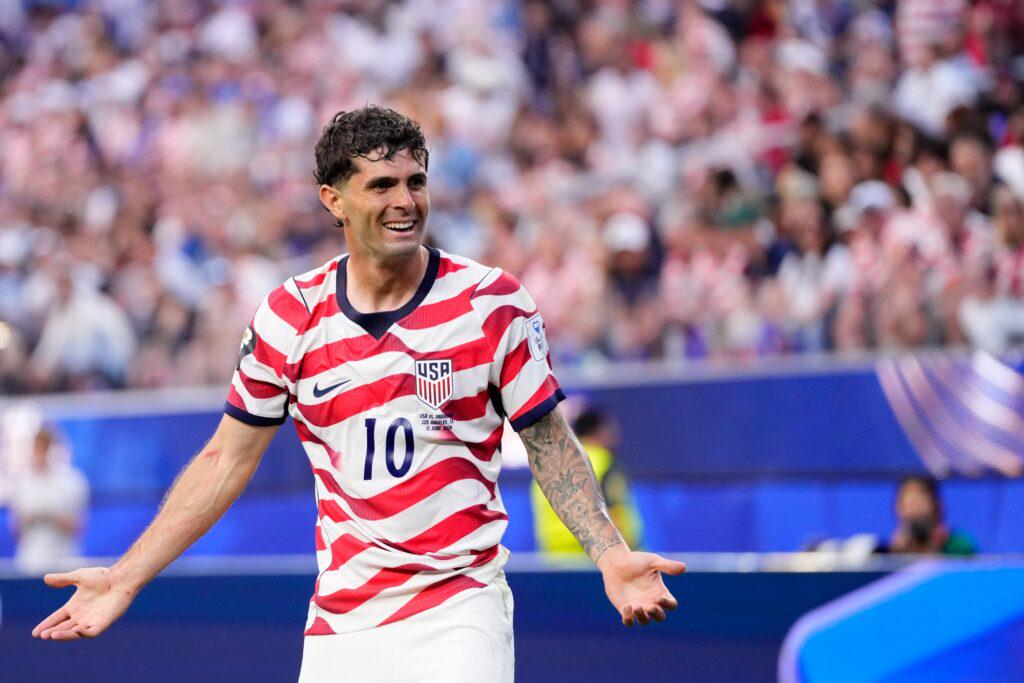
Also sharing the “mid-generation mainstay” role is Pedri. Compared with Yamal’s vertical penetration, Pedri is more of an orchestrator—pushing Spain’s midfield from mere control to genuine winning capability. For Spain, when the wing prodigy and the midfield brain are both in peak form, the title puzzle is finally complete. Christian Pulisic carries the weight of expectation as the United States serve as hosts; his dribbling and goals will directly determine whether home atmosphere translates into results.
How to Watch at the Generational Handover
From a development standpoint, the most compelling storylines at this World Cup are not simply who scores the most, but whether three growth arcs can close the loop in the same tournament: the Mbappé-style “core maturity phase,” the Yamal-and-Pedri-style “talent realization phase,” and the Messi-and-Ronaldo-style “legendary farewell phase.” The expansion to 48 teams creates more room for upsets, but those who remain in the title conversation tend to be players whose personal trajectory meshes most tightly with team rankings and the pressure of the schedule.
For us, the journey through the USA, Canada and Mexico in July will supply the answers—who turns a final World Cup into a coronation, and who turns a first into an ascension to the throne. The seven players mentioned above and the teams behind them have already sketched the World Cup narrative off the pitch: rankings provide confidence, friendly draws serve as preparation, but what truly decides history remains those few dozen minutes this summer—whether the young generation dares to take the baton, and whether the veterans can still set the tone.