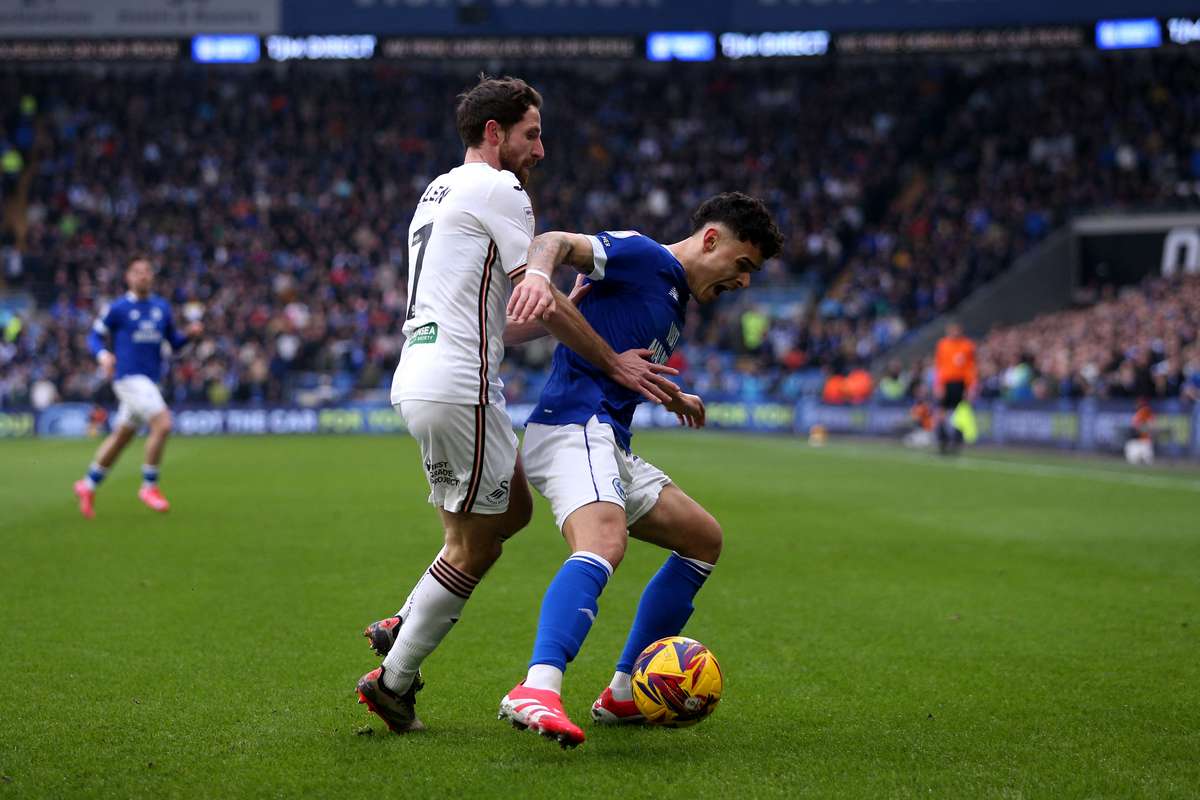






The 2026 World Cup — an unprecedented co-hosted spectacle in football history, with the United States, Canada and Mexico all serving as hosts — may well be remembered by future generations as a "closing act for a generation." When we pull the camera back from the pitch, this tournament is no longer just a battle over points and progression lines; it is the ultimate chessboard where two footballing generations collide head-on.
According to information at our disposal, as the 2026 World Cup draws nearer, rising stars such as Lamine Yamal, Jude Bellingham and Jamal Musiala are ready to make their mark, while at the same time, the most iconic figures of the past two decades are also approaching the final chapter of their careers on the international stage.
Messi and Ronaldo: The Tactical Weight of a Sixth World Cup Campaign
For fans who came of age in the 2000s and 2010s, the cover story still revolves around two men: Messi and Ronaldo. Argentina currently sit third in the FIFA rankings with 1,874.81 points; Portugal have climbed to fifth with 1,763.83. Neither side has yet appeared in the tournament proper — Argentina open against Algeria, while Portugal face DR Congo — but anticipation off the pitch is already at fever pitch.
This marks each man's sixth World Cup campaign — a figure that in itself speaks to their longevity at international level and tactical indispensability. Messi heads into the tournament carrying the champion's aura after lifting the trophy in Qatar; his drop-back playmaking and finishing in the final third remain the core pillars of Scaloni's system. At 41, Ronaldo no longer shoulders the physical burden of pressing across the entire pitch, but in set pieces, box poaching and as a psychological talisman, Portugal's string of consecutive 0-0 draws in recent friendlies (including against Wales and Norway) partly reflects the team's struggles to break down opponents when lacking an outright match-winner.
Neymar and Modric: One Last Push for the Veterans
Neymar embodies a narrative of belated vindication. At the 2014 World Cup on home soil, the No. 10 shirt was meant to carry the future of the Seleção; twelve years on, the 34-year-old remains plagued by injuries, his talent undiminished yet unable to replicate the consistency of his peak. FIFA-ranked sixth Brazil still need him to deliver the final ball from the left half-space and change pace inside the box — for him and an entire generation of Brazilian players, this tournament is a window that cannot be missed.
Modric represents a different model entirely. The 40-year-old midfield maestro led Croatia to the 2018 final and a third-place finish in 2022. Ranked 11th by FIFA, Croatia have drawn their recent friendlies against England and the Czech Republic, with possession-based, slow-tempo transitions still the bedrock of their tactical identity. That he remains capable of orchestrating from the starting lineup at the tail end of a World Cup cycle itself underscores his decision-making value under pressure.
A New Generation Rises: The Changing of the Guard Has Begun
Running parallel to that farewell narrative is another upward curve. The post-2000s generation embodied by Lamine Yamal—high-speed vertical progression, off-the-ball runs, and one-on-one play in the half-spaces—is reshaping the template for wide attacking play. Bellingham and Musiala, meanwhile, are providing greater vertical penetration and space compression from central midfield and the No. 10 role, respectively.
From a tactical standpoint, the 2026 World Cup will mark the overlap of the old framework’s last full run and the new template’s first comprehensive stress test. Host nations Canada (ranked 30th) and Mexico (ranked 15th) enjoy the twin advantages of direct qualification and a home schedule, making match tempo in the group stage, travel distances, and climate adaptation key variables in how veteran fitness is managed.
What to Watch Under the Tri-Host Format
With the tournament spanning three North American locations, the density of long-haul travel will hit a World Cup record high. For players such as Messi, Ronaldo, Neymar, and Modric—whose availability and recovery windows are increasingly sensitive—load management from the latter stages of the group phase through the knockout rounds will directly determine whether their explosiveness can be delivered when it matters most.
In terms of scheduling pressure, whether Argentina can hit their stride quickly in their opening match against Algeria, and whether Portugal’s attack can break down a compact defense against DR Congo, will both serve as litmus tests for how efficiently veteran-heavy systems start the tournament. Portugal’s run of 0-0 draws in the warm-up phase is a reminder that defensive solidity does not necessarily mean a blunt attack—it is more that the timing of substitutions to break the deadlock and the quality of half-space penetration still need sharpening.
A farewell is never merely a sentimental word, but the normal rhythm of football’s generational turnover. If the 2026 World Cup truly becomes a collective curtain call for this generation of stars, it will also provide the grandest stage for the next wave of protagonists to be crowned. For fans, what really merits close attention from here is the tactical setup at the starting line, first-round attacking conversion rates, and the sharply different fitness curves of veterans and rising talents under the same knockout-round pressure.