




Based on information available to us, the 2026 FIFA World Cup will be jointly hosted by the United States, Canada, and Mexico. The expanded format featuring 48 teams and 104 matches has created unprecedented scoring opportunities for forwards. The Golden Boot is never merely an individual honor—it is often directly tied to how far a team progresses and whether they can find the net in crunch games. Whoever can consistently convert chances into goals through a demanding schedule will be closer to rewriting history.
New variables in the Golden Boot race under the expanded format
Compared with previous editions featuring 32 teams and 64 matches, this World Cup’s fixture list has nearly doubled. With the group stage and knockout rounds stacking up, that means more minutes on the pitch, more set-piece opportunities, and more space on the counter. For elite scorers, this is an opportunity; for fitness management and rotation planning, it is also a risk. For attackers to maintain their finishing efficiency across seven or more games, end-of-season club workload and clarity of their role in the national setup will directly shape who wins the Golden Boot.
Historically, from Just Fontaine’s 13 goals in 1958 to Kylian Mbappé’s dominant showing in 2022, Golden Boot winners typically combine individual form with deep tournament runs. The current FIFA rankings show France sitting top, Argentina third and England fourth—all three traditional powers have the foundation to carry their main strikers into later rounds; meanwhile, Norway rank 31st, and whether they can navigate a path through the knockout stages will directly determine Erling Haaland’s sample size for the tournament.
Four leading scorers: data, roles, and ceiling
Mbappé: efficiency is already the default answer
So far in the 2025-26 season, Mbappé has scored 43 goals and provided eight assists in 39 matches, averaging more than a goal per game, and he remains the undisputed benchmark up front at club level. In the Champions League this season, he has already contributed 15 goals, showing that in high-intensity battles he can not only finish but also keep pinning back defenses. If France go deep into the knockout rounds again, Mbappé almost automatically carries the tag of top Golden Boot favorite—the question is not whether he can score, but whether the team can consistently supply him with the final pass and second-ball chances.
Haaland: Can explode even at a slower tempo
Haaland’s game is straightforward: he does not need a long buildup—if he gets the ball in the box, he is a threat. High shot volume, high conversion rate, and persistent positioning give him the explosiveness to score five goals across three matches. Norway’s recent international games have mostly unfolded in tight, cagey fashion, with every World Cup qualifier on the line for qualification; once Norway advance and he gets enough minutes in the group stage, Haaland could quickly climb the scoring charts with a hat-trick in a single game. His ceiling depends on the national team’s schedule, not fluctuations in his club numbers.
Kane: England’s most reliable finisher
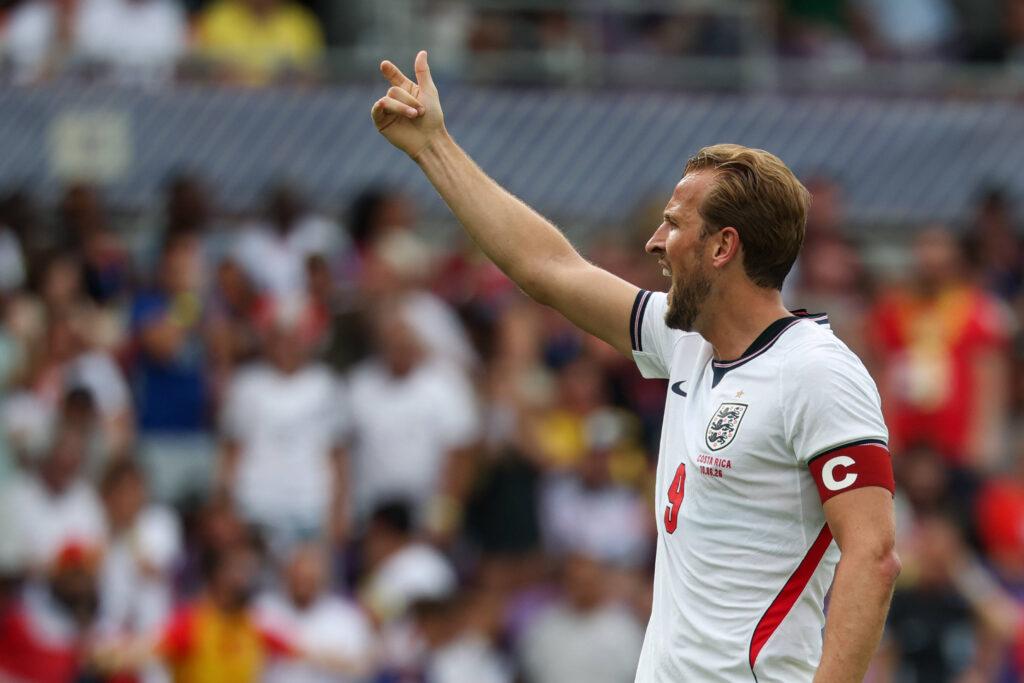
Kane remains one of the most complete No. 9s in the game today. Penalty-taking, movement, and expected-goals conversion keep him as the final link in England’s attack for the long haul. In-house data shows England fired 28 shots with eight on target in a recent international, with 81% possession—proof the Three Lions can keep creating chances. Kane’s job is to turn that edge into goals. As long as England maintain creativity up front, Kane’s Golden Boot credentials will not fade with age.
Lautaro: Argentina’s focal point up front
Lautaro Martínez has already become the settled answer in attack for Argentina. His strengths lie not in flair, but in his movement and finishing consistency inside the box — he delivers goals steadily at both club and international level. With Argentina’s midfield boasting ample creativity, as long as Lautaro stays fit and locks down a starting spot, he could rack up goals quickly during the group stage — that would be crucial in the Golden Boot race, because under the expanded format, padding the tally early often shapes the standings later on.
Who is more likely to have the last laugh?
Weighing the format and ranking backdrop together, the paths for the sides featuring Mbappé and Kane look more secure, while Lautaro, backed by Argentina’s standing as the third-strongest side, also has the credentials to push up the charts; Haaland’s individual quality is elite, but Norway’s qualification prospects pose the biggest uncertainty. Across 104 matches, variance will be magnified — and it will reward those strikers who maximise their conversion of chances — Mbappé’s 43 goals and 15 in the Champions League this season already offer the clearest benchmark.
For fans, the final stretch of World Cup qualifying is worth watching closely for Norway and Haaland’s involvement, while also keeping an eye on rotation and injury updates among the front lines of France, England and Argentina in key friendlies. The Golden Boot battle is rarely decided by one hot streak — it comes down to who can carry their form through to July, the month that will truly define their legacy.