












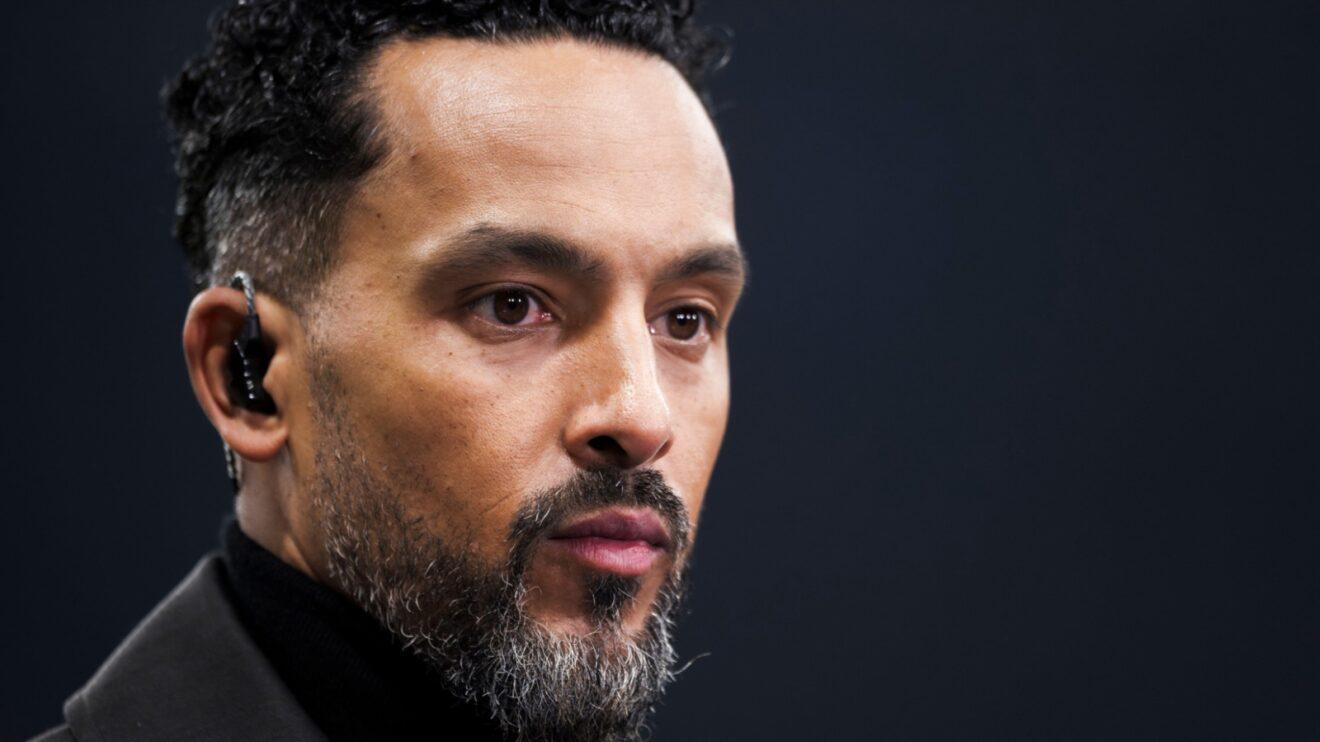
Arsenal legend Theo Walcott has publicly said he "hopes" Max Dowman will not go to the World Cup with England — and that if Thomas Tuchel does call the 16-year-old up, the youngster would be better off turning it down. Walcott stressed that this was not aimed at the national team or at Dowman himself, but rooted in a teenage experience he still replays in his mind: in 2006, Sven-Goran Eriksson shockingly included 17-year-old Walcott — who had yet to make a Premier League appearance — in England's World Cup squad, sending shock waves through English football. Twenty years on, England faces the familiar question of whether to bend the rules for a prodigy, and Walcott's answer is starkly different from the one he embodied back then.
Two teenage paths: the exception and protection
This season Dowman has featured 12 times for Arsenal's first team, breaking several records along the way, and debate has grown over whether the Gunners' rising star can force his way into Thomas Tuchel's World Cup squad. Tuchel offered a measured assessment in March — "without doubt he is a hugely talented, even outstanding player, especially for his age" — while also stressing the reality: "Dowman is competing for minutes; he is not yet a regular starter for Arsenal."
Tuchel believes Dowman is in the "best environment": a club built on steady competition and putting the team first, where he can learn from top players. For youngsters like him, "we can all see it, and we could call him into the World Cup squad at any time." The door was left ajar, but Walcott heard something else: the national team could open its door without him having to walk through it right now.
Speaking to the Mirror, Walcott was blunt: "I hope he doesn't go. I'm not trying to be awkward — if I could go back, I'd change my mind. I'd tell myself: no, don't go. But you can't say that to a 17-year-old." In 2006, he was the teenager pushed into the spotlight; in 2026, Dowman has already played in the Premier League. The paths look similar, yet Walcott stressed: "We are not the same."
"If I had my time again, I'd say no"
Walcott's selection for England at the 2006 World Cup in Germany remains one of football's most famous "shock picks"—a teenager who had yet to make his Premier League debut was suddenly thrust onto the game's biggest stage. He recalls having to "grow up fast," forced to face the media and expectations completely unprepared; by contrast, Dowman is now being "protected" by Arsenal, with the club deliberately limiting his exposure and workload so he can adjust to first-team life at his own pace.
"He still needs to grow emotionally—he's very young," Walcott said. "This England squad isn't mature or experienced enough yet, and taking him now might not be the responsible choice for either the player or the team." He added that Dowman will "get there eventually," but the 2026 World Cup "isn't the right time"—"arguably, there are players more deserving of a spot who should be ahead of him."
His comments quickly spread through the British media: on one side, Arsenal's "nurturing" approach to a prodigy; on the other, the national team manager leaving the door open to a call-up; and in the middle, a newly turned 16-year-old who has already left his mark in the Premier League. The debate crossed into the mainstream because it touches a persistent anxiety in English football—FIFA ranking still firmly in the top four (currently 4th, on 1825.97 points), yet major tournament results have long fallen short of expectations; every time a World Cup year approaches, the question of whether to gamble on "the next big name" sparks nationwide debate.
Tuchel's dilemma
For Tuchel, calling up Dowman would serve both as a signal of long-term talent investment and a test of public opinion. In his remarks in March, he gave Dowman high praise while also drawing a line with talk of "competing for minutes" and "unconventional starting roles"—neither closing the door nor inflating expectations. If a World Cup spot is handed to him before 2026, the Three Lions would revive the "boy wonder" narrative; if Tuchel heeds Walcott's advice to wait, it would extend the recent club-versus-country split over young players: Arsenal want a sustainable development curve, while the national team may be chasing immediate impact and headline appeal.
Dowman has made 12 first-team appearances this season, and the numbers behind that reflect how the entire Premier League is repricing “youth as immediate impact” — Arsenal are willing to give time, but not willing to gamble on burnout. Walcott, speaking from experience, pinpoints the crucial point: emotional maturity and competitive maturity do not advance in lockstep; the World Cup stage, the media intensity and the brutality of knockout football impose another order of test on a 16-year-old, which is not fully the same as whether he has played in the Premier League.
What England must still answer before the World Cup
The 2026 World Cup will be held in North America, and as a traditional powerhouse, every spot on England’s squad keeps supporters on edge. Walcott’s advice will not dictate Tuchel’s call directly, but it offers a clear reference point for the debate — the exceptional promotion in 2006 brought glory, but also the regret of “if only we could do it again”; Dowman in 2026 has club protection and league experience, yet stands at the same career crossroads.
From a narrative standpoint, a Gunners legend telling a Gunners prodigy “don’t go” has more story than pure squad speculation: it binds personal turning point, club interests and national-team glory into one debate. For Dowman himself, the real test may not be “can he go?” but “when is the right time to go?” — Walcott has already given his answer; Tuchel and Dowman still hold the final say.
With time still before the World Cup opens, Dowman’s minutes, Arsenal’s season trajectory and England’s performances in friendlies will all shift the weight of this discussion. If he keeps proving himself in the Premier League, calls for his selection will only grow louder; if Walcott’s judgment prevails, 2026 could be the World Cup Dowman “misses”, or the tournament that paves the way for a fuller introduction in 2028 or 2030. For the Three Lions, walking the tightrope between “not wasting talent” and “not burning out talent” is the longer-term question beyond any single name.