

















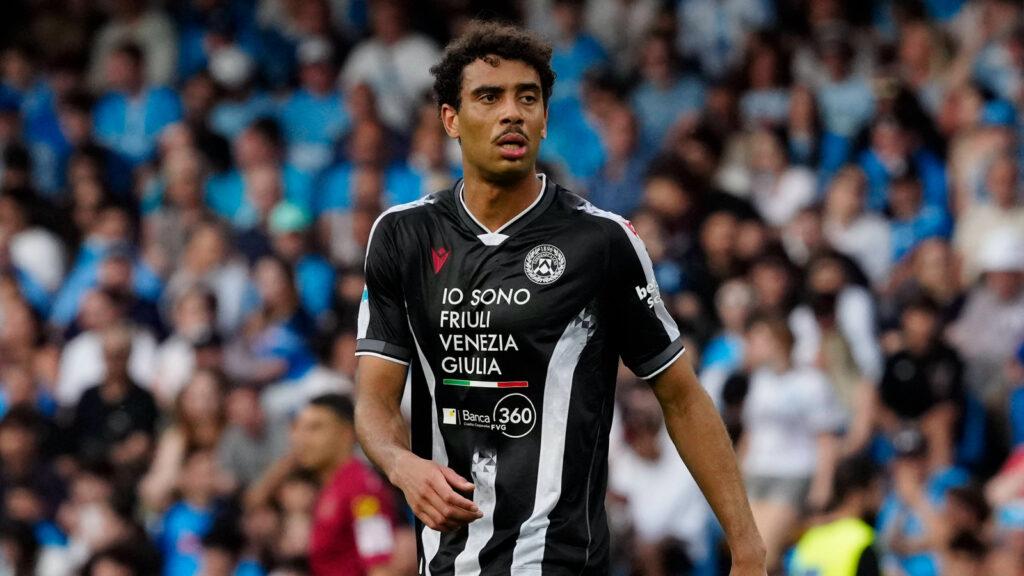
For clubs that treat development as more than a slogan, a transfer fee is never only about market value. It is a statement about who gets a chance to grow, who is trusted at the highest level, and what kind of football a community is willing to support. In that light, Fiorentina’s push to secure Arthur Atta from Udinese is about far more than adding another body to a midfield that needs fresh energy.
The 2003-born French midfielder stands one step from joining the Viola in a deal reported at roughly 30 million euros. That figure reflects steady progress rather than overnight hype. After Udinese redeemed him and gave him room to mature, Atta turned last season into a genuine breakout campaign in Serie A. His athletic profile, ball-carrying, and tactical flexibility made him a central figure for the Friulian side and one of the league’s most discussed young profiles.
A pathway that rewards patience
Udinese have long been associated with a model that asks patience from players and clubs alike. Redemption, minutes, and responsibility are not abstract ideas there; they are part of how careers are shaped. For Atta, that environment appears to have mattered. He did not arrive as a finished product. He grew into one.
Across the season, his consistency and composure against stronger opponents suggested a player ready for a bigger stage without losing the habits that made him effective. That is the kind of development story Italian football still needs: young athletes given structure, trust, and time to become contributors rather than commodities moved before they can breathe.
For France, currently ranked first in the FIFA standings with renewed momentum at international level, the pipeline of technically mobile midfielders remains one of the country’s defining strengths. Atta’s rise fits that wider pattern of French players arriving in Serie A with both physical tools and tactical education. It also underscores why clubs across Italy and abroad began circling once his performances became impossible to ignore.
Why Fiorentina moved decisively
Fiorentina enter this window after a season that fell short of expectations. The response has been direct. Securing Atta would represent one of the window’s most significant investments and a clear signal that the Viola intend to compete again with players who can grow inside the system rather than serve as short-term fixes.
Reports indicate the club beat competition from several Italian sides, including Inter and Napoli, along with interest from Premier League clubs. In a crowded market for one of Serie A’s most sought-after midfield profiles, that outcome speaks to planning as much as budget. Fiorentina are not merely buying talent; they are choosing a profile that matches a broader rebuild.
The move also arrives alongside the official signing of Radu Dragusin, another step aimed at strengthening both defense and midfield with players already tested in Italy’s top flight. Taken together, the deals suggest ambition shaped by readiness, not speculation.
Grosso and a new cycle
Central to that project is Fabio Grosso to lead the bench after gaining experience across recent seasons. His appointment is part of a wider relaunch: a younger squad, a clearer growth curve, and a push to return Fiorentina to the upper reaches of the table. Atta embodies that direction. He is present-minded enough to improve the midfield now and future-minded enough to anchor a longer cycle.
For supporters at Stadio Artemio Franchi, that combination matters. Rebuilds are easier to accept when they feel purposeful. A French midfielder arriving from Udinese with proven Serie A minutes offers something concrete: a player shaped by the league, not imported around it.
What the fee says about value beyond the pitch
A fee near 30 million euros is substantial, but it also carries a social reading inside football’s ecosystem. It rewards a club that invested in a young player’s development. It validates a pathway that gave Atta stability after redemption. And it places responsibility on Fiorentina to continue that growth rather than treat the signing as an endpoint.
For Udinese, the transaction would be another example of their ability to identify, develop, and eventually move talent at a level that sustains the club’s model. That work rarely dominates highlight shows, yet it shapes careers, supports academies, and keeps smaller markets relevant in a sport increasingly defined by financial concentration.
For Atta himself, the move is the next chapter in a story still being written. He leaves behind a club that helped convert potential into performance. He arrives at one preparing to trust youth as a competitive strategy under Grosso. The football questions remain familiar: Can he carry his form into a larger spotlight? Can Fiorentina build around him without rushing the process?
A signing for present and future
Serie A will watch closely because deals like this define how clubs balance immediate need with long-term identity. Fiorentina are betting that Atta can help now and mean more later. Udinese, if the transfer is completed, will again show how development can produce both sporting reward and financial return.
In a summer already marked by movement across Italy’s top flight, this one stands out for what it represents: a young French midfielder crossing from a development-minded club to a historic side trying to rediscover direction. The numbers will be debated. The ambition is clear. And for anyone who cares about football’s quieter work—nurturing talent, rewarding patience, building teams that last—the story is worth following well beyond the transfer sheet.