

















Tottenham Hotspur's 2026 summer transfer window is unfolding less like a reactive shopping list and more like a sequenced operating plan. Under Roberto De Zerbi, the club has moved early, spent decisively in priority areas, and left itself room to keep building rather than pausing after one or two headline deals. That rhythm matters in the Premier League, where late-window chaos often produces expensive compromises. Spurs, by contrast, appear to be treating recruitment as infrastructure.
The numbers already tell part of the story. Free additions have strengthened the squad's depth without consuming budget: Andy Robertson from Liverpool, Marcos Senesi from Bournemouth, and Martin Dubravka from Burnley each arrived on zero transfer fees. Paid moves have targeted positions where marginal gains can reshape match control. Sandro Tonali's arrival from Newcastle United and Mateus Fernandes' switch from West Ham reportedly accounted for a combined outlay in the region of £185 million, while Brighton centre-back Jan Paul van Hecke joined for £52 million.
Those outlays are not random. They align with a coach who wants predictable progression through midfield thirds, cleaner rest-defense, and players who can sustain intensity across a longer calendar. Tottenham are not merely buying names; they are buying functional fit for a system that will be judged over multiple seasons, not a single August headline.
Early Window Discipline as a Competitive Advantage
Premier League clubs that wait until late July or August to define their squads often pay twice: once in fee inflation and again in poor integration time. Tottenham's hierarchy has clearly chosen a different path. By securing multiple arrivals before the window reaches its most volatile phase, the club has given De Zerbi a longer runway to embed tactical habits, establish role clarity, and reduce the friction that usually accompanies a cluster of late signings.
That approach also creates leverage in ongoing negotiations. When a club has already addressed several core needs, it can walk into talks with Manchester City or Juventus without the desperation that weakens bargaining position. Spurs are not shopping because they must; they are shopping because the next layer of the project is ready to be installed.
Midfield Reconstruction at the Center of the Project
If one theme defines Tottenham's window so far, it is midfield authority. Tonali and Fernandes were not peripheral upgrades. They represent a deliberate attempt to change how Spurs win and lose possession, how they recover after turnovers, and how they protect leads in the final third of matches.
Tonali and Fernandes as Structural Pieces
Sandro Tonali brings combative ball-winning and tempo management from a Newcastle side that has learned to compete at the top end of the table under sustained pressure. His profile suits a De Zerbi team that wants vertical progression without surrendering compactness. Mateus Fernandes, meanwhile, adds a different gear: carrying capacity, line-breaking passes, and the kind of youthful athleticism that can keep Tottenham competitive in high-transition phases.
Pairing those profiles is a long-term bet on control. In modern Premier League football, midfield quality is rarely about one dominant No. 8; it is about combinations that can rotate responsibilities without the whole structure collapsing. Tottenham's investment here suggests the club believes its competitive ceiling over the next three to five years will be determined more by central-zone reliability than by any single attacking flourish.
Defensive Depth Without Sacrificing Flexibility
Behind the midfield rebuild, Spurs have quietly reinforced the back line. Senesi's move on a free transfer is especially meaningful from an operations standpoint: experienced top-flight centre-back depth acquired without fee risk. Van Hecke's £52 million fee signals higher conviction. Brighton have repeatedly produced defenders who translate well into more demanding environments, and Tottenham's willingness to pay that price indicates they view the position as a multi-year starter issue rather than a stopgap.
Robertson's arrival adds another layer of professionalism and left-sided versatility, while Dubravka provides goalkeeper insurance at minimal cost. None of those moves dominate social feeds, but each reduces the kind of squad fragility that derails league campaigns when injuries cluster in winter.
Attacking Upgrades Hinge on Manchester City
With the spine of the team taking shape, Tottenham's next major priority appears to lie in wide attack. Reports indicate Savinho has emerged as the club's next high-priority target, with Spurs monitoring whether Manchester City are prepared to sanction an exit and on what terms.
That waiting posture is strategically sound. City do not need to sell, which means Tottenham's negotiation must be patient, precise, and backed by credible alternatives. The same reporting cycle has linked Cody Gakpo as another winger option Spurs admire, suggesting the club is building a decision tree rather than betting everything on one name.
Savinho and the Winger Pipeline
For De Zerbi, wide players are not decorative assets. They are press triggers, spacing tools, and final-third connectors. Savinho's dribbling threat and ability to attack isolated defenders fit a system that wants to stretch back lines and create cutback zones. Gakpo offers a different portfolio: positional intelligence, left-sided balance, and proven Premier League adaptability at Liverpool.
Should Savinho become Tottenham's seventh major addition, the move would complete a clear arc: midfield control first, defensive reliability second, then direct attacking elevation. That sequencing is exactly what sustainable contender-building looks like when a club is trying to avoid the trap of buying forwards before it can reliably supply them.
Goalkeeper Chess: Di Gregorio In, Vicario Out?
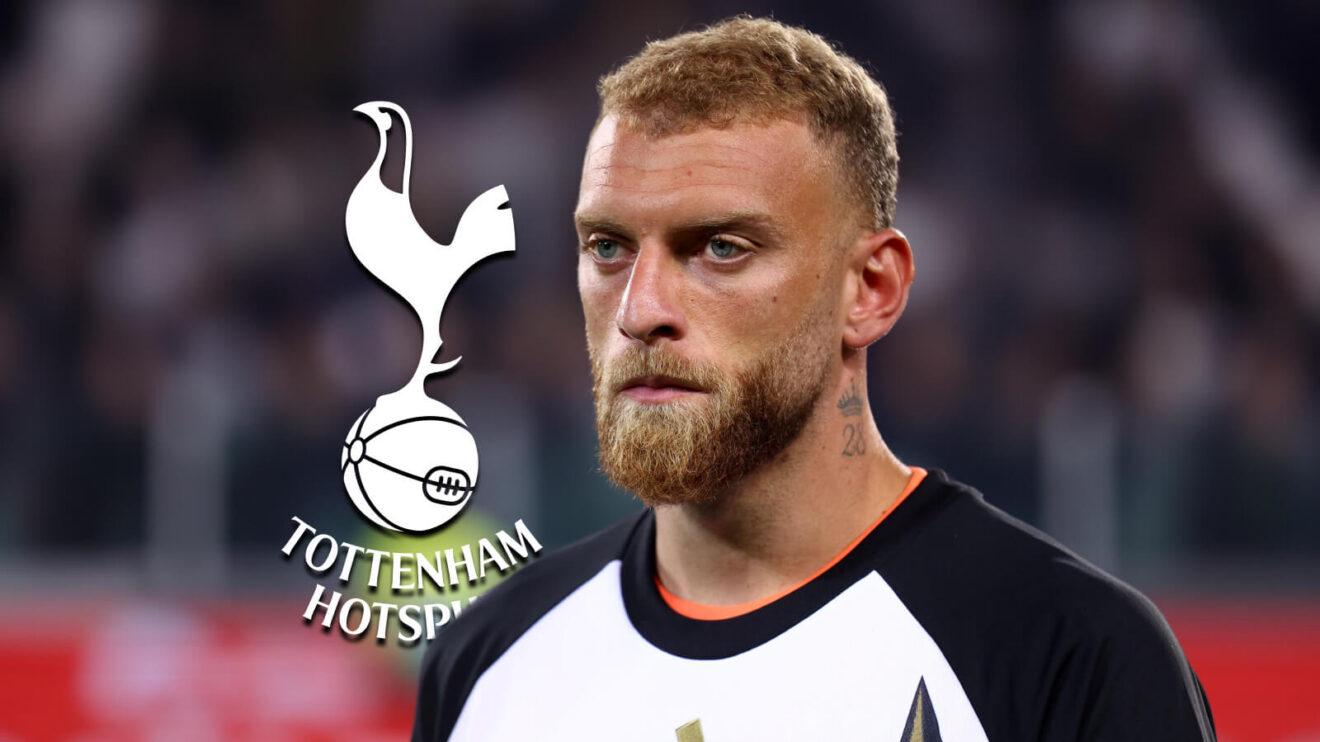
Tottenham's goalkeeper planning may produce their most intriguing domino effect of the summer. Guglielmo Vicario has been a dependable starter, yet reports from Italy suggest Juventus hold strong interest in the Spurs No. 1 and that Tottenham have now made a decisive move for Juventus goalkeeper Michele Di Gregorio.
The football logic is coherent even if the emotional optics are sensitive. Di Gregorio is understood to be available this summer, with Juventus open to a sale provided they receive at least €15 million. De Zerbi reportedly rates the 28-year-old highly, and a swap-adjacent sequence—Vicario outbound, Di Gregorio inbound—would allow Tottenham to refresh the position without leaving a tactical hole.
Goalkeeper transfers are often underestimated in broader window analysis, but they carry outsized operational value. Distribution quality, command in set-piece phases, and consistency under high press volumes can quietly add points across a season. If Di Gregorio becomes Spurs' eighth signing, it would underscore how thoroughly the club is auditing every starting role rather than chasing only marketable outfield stars.
The Kroupi Race and Premier League Rivalry Dynamics
Beyond the established senior targets, Tottenham have also intensified interest in Eli Junior Kroupi, with the club reportedly ready to push hard to beat Arsenal to the young forward. Bournemouth's role in that storyline adds another layer: the Cherries have become a recurring stage for Premier League talent pipeline battles, and Kroupi now sits at the intersection of developmental upside and immediate commercial attention.
For Spurs, the move would not be a luxury purchase. It would be a statement about how they intend to compete for emerging talent inside the league ecosystem, not only in established star markets. Arsenal's reported presence in the same race raises the stakes. North London rivalries often inflate fees, but they also test club conviction. Tottenham's willingness to go "all out" suggests they view Kroupi as part of a longer horizon—an asset who can grow with a reshaped squad rather than a one-season gamble.
What This Window Signals for Tottenham's Long Game
Taken together, Tottenham's summer activity reads as a coordinated attempt to close structural gaps while preserving flexibility for one or two more decisive moves. Free transfers have controlled cost risk. Major midfield outlays have targeted match control. Defensive spending has targeted reliability. The next phase—Savinho or an equivalent wide forward, potentially Di Gregorio in goal, and a serious push for Kroupi—would shift the project from foundation work to top-end differentiation.
The Premier League rewards clubs that know what they are building before the market forces them to guess. De Zerbi's Tottenham are acting like a club with a multi-year blueprint, not a club chasing momentum from last season's narrative. If the remaining pieces land, this could be remembered as the window where Spurs stopped assembling a competitive squad and started assembling a sustainable contender.