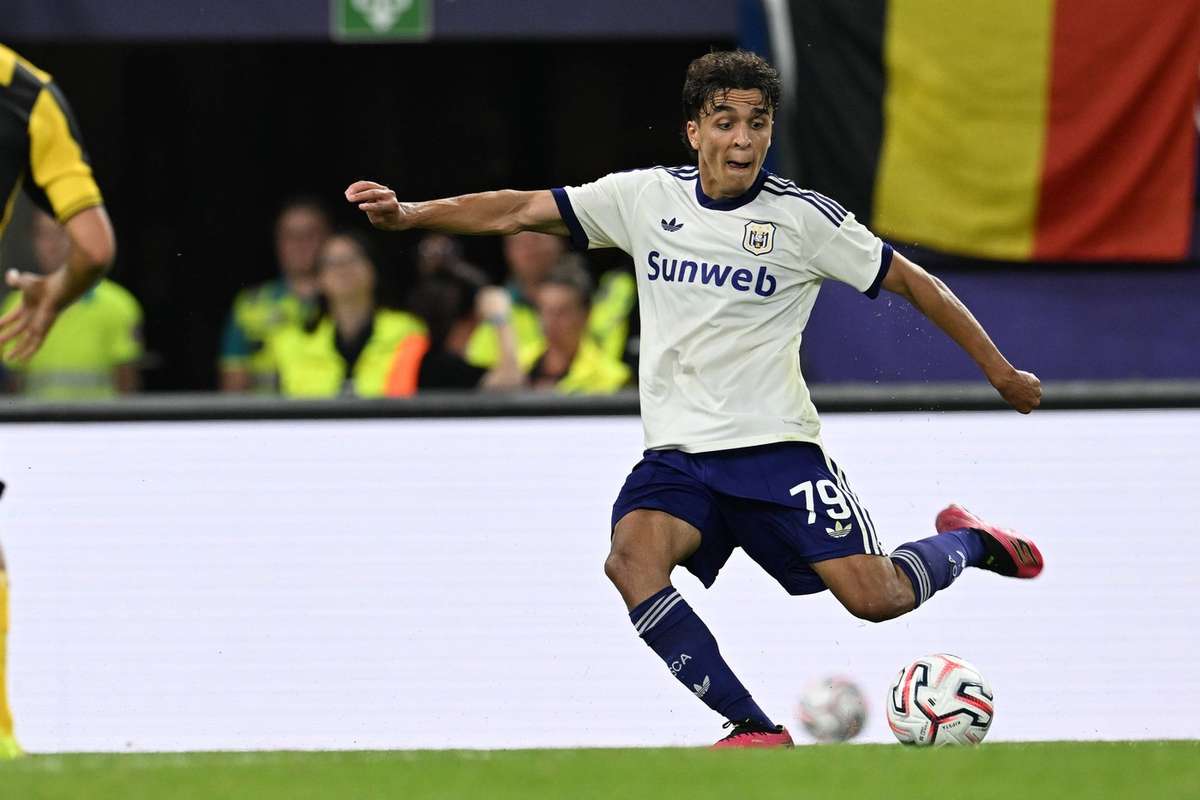


















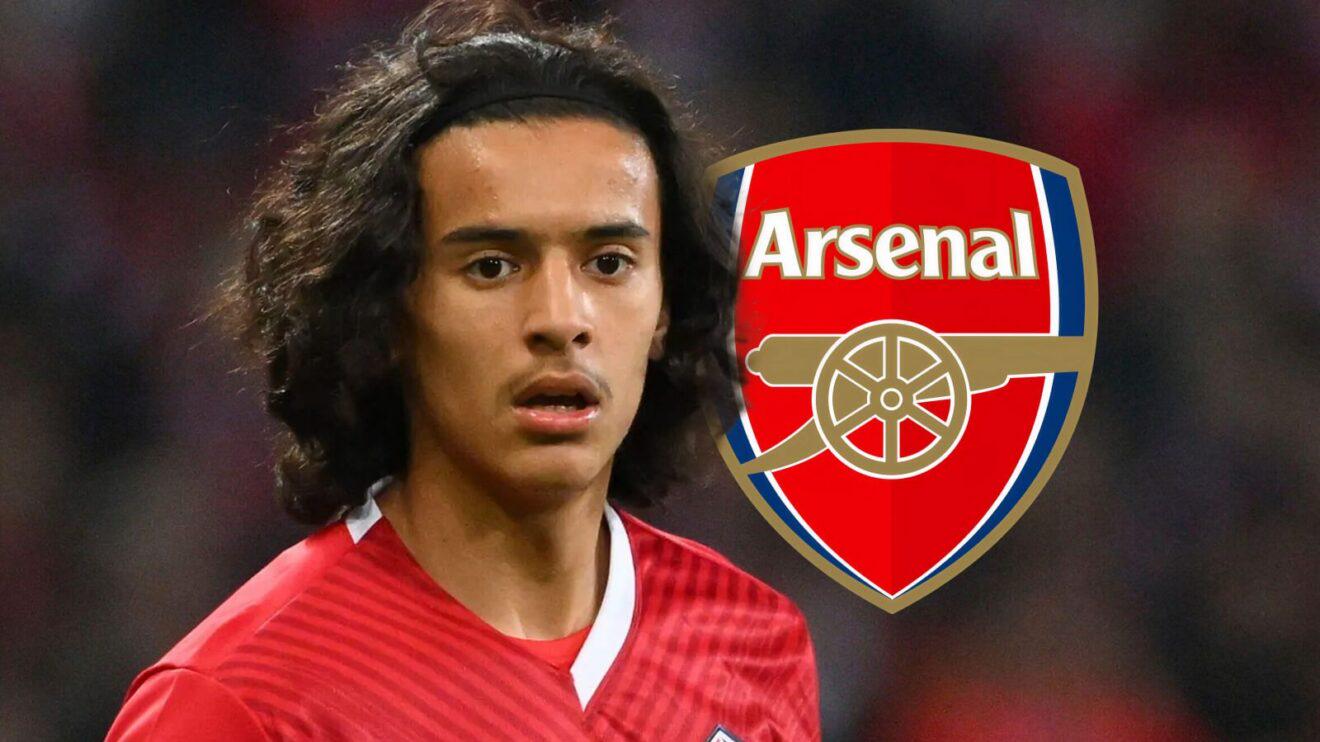
The race for one of European football's most coveted teenage midfielders has reached a structural turning point. Lille's insistence on a loan-back arrangement as a condition of sale has long been viewed as a complication for Premier League buyers. That complication is now dissolving. Multiple English clubs have recalibrated their negotiating positions, and the framework for an €80 million transfer of Ayyoub Bouaddi is firmly in place.
The Policy Problem: Dual-Tier Pricing in the Modern Transfer Market
European clubs with Champions League revenue increasingly deploy what amounts to a two-speed transfer policy. The model is straightforward in design but complex in execution. A selling club offers one price for an outright transfer and a reduced price if the buyer accepts a post-sale loan arrangement that keeps the player in the seller's squad for an additional campaign.
For Lille, the arithmetic is unambiguous. An immediate sale commands a fee in the region of €100 million. A sale paired with a one-season loan-back drops the asking price to roughly €75 million to €80 million. The discount is not a concession born of weakness. It reflects a deliberate institutional choice: Lille will compete in the Champions League during the 2026-27 season and wants Ayyoub Bouaddi — their most dynamic midfield asset — on the pitch at the Decathlon Arena rather than in a foreign development program.
This is not an isolated negotiating tactic. It represents a broader governance shift in how mid-tier European clubs protect competitive equity while monetizing elite youth production. Lille has invested years in Bouaddi's development through their academy pipeline. Allowing him to depart without either maximum compensation or continued on-field contribution would undermine the club's dual mandate of sporting ambition and financial sustainability.
Why Premier League Clubs Initially Resisted
The resistance from English suitors was predictable and rational. Premier League clubs operating under squad registration rules, work-permit frameworks, and intense domestic competition typically prefer immediate integration of high-value acquisitions. Paying a substantial transfer fee while the player remains unavailable for a full season creates a capital allocation problem: funds are deployed, but the asset generates no near-term return.
Arsenal, Manchester City, and Chelsea all entered the pursuit with the expectation of bringing Bouaddi into their first-team environments without delay. Each club assessed the teenager as ready for top-flight minutes based on his sustained Ligue 1 starting role over the past 18 months and his standout performances for Morocco at the World Cup. The gap between readiness and availability created the central friction in negotiations.
Agitation: A Crowded Market Forces Strategic Concessions
The competitive landscape intensified the pressure on Premier League negotiators. Interest in prising Bouaddi from Lille extends well beyond England. Paris Saint-Germain and Real Madrid remain active in the background, each capable of structuring deals that accommodate Lille's institutional preferences while offering the player a pathway to one of Europe's most visible stages.
Domestically, the suitor pool is equally crowded. Liverpool and Manchester United harbour their own ambitions of securing Bouaddi's signature. With five Premier League clubs engaged and continental giants monitoring developments, the cost of inflexibility rises sharply. A buyer unwilling to accept the loan-back framework risks losing not just the player but also the negotiated fee advantage that comes with it.
The €20 million to €25 million differential between the two pricing tiers is not trivial at a time when financial fair play scrutiny, squad cost controls, and amortization accounting shape every major expenditure. For clubs managing multi-front squad builds, the reduced fee effectively subsidizes the delayed integration — a trade-off that increasingly looks like sound institutional economics rather than a negotiating defeat.
Bouaddi's Profile Amplifies the Stakes
At 18, Bouaddi has already cleared benchmarks that typically justify extraordinary transfer expenditure. He has been a regular starter in Ligue 1 across 18 months of senior football, demonstrating consistency rather than fleeting promise. His World Cup displays for Morocco — currently ranked eighth in the FIFA standings — validated his capacity to perform on the sport's largest stage against elite international opposition.
These are not speculative projections. They are observable performance data points that multiple scouting departments across Europe have independently corroborated. When a player of this profile becomes available under any pricing structure, the market responds with the urgency of a regulated auction where procedural compliance matters as much as financial capacity.
The Solution: Three English Clubs Soften Their Stance
The breakthrough came when three Premier League clubs — including Arsenal — agreed to meet Lille's request. Manchester City and Chelsea have joined that group, each now prepared to sign Bouaddi at the reduced fee and loan him back to Lille for the entirety of the 2026-27 campaign.
This represents a meaningful shift in acquisition policy. Sources close to the negotiations indicate that all three clubs initially prioritized immediate first-team integration. They have since concluded that accepting Lille's structural conditions may prove decisive in securing the player's long-term registration rights.
For Arsenal, the concession aligns with a broader recruitment philosophy that balances competitive urgency with pragmatic deal-making. The London club has been among the most aggressive Premier League participants in this transfer window, and yielding on the loan-back point suggests a calculated judgment that the total cost of acquisition — fee plus opportunity cost of delayed availability — remains favorable relative to alternative targets.
Manchester City and Chelsea arrive at the same conclusion through parallel reasoning. City's midfield pipeline benefits from depth planning that can absorb a one-season delay without compromising short-term competitiveness. Chelsea's ongoing squad reconstruction similarly accommodates staggered integration timelines, particularly when the discounted fee preserves financial flexibility for concurrent moves.
What the Loan-Back Arrangement Means in Practice
Under the accepted framework, the buying club completes the transfer at approximately €80 million. Bouaddi then returns to Lille on loan for 2026-27, featuring in Ligue 1 and the Champions League while remaining under the contractual ownership of his new employer. At the conclusion of that season, he transfers permanently to the Premier League club's registration.
This structure satisfies Lille's sporting mandate for one more European campaign with their star midfielder. It gives the acquiring club secured rights over a generational talent at a meaningful discount. And it provides Bouaddi himself with continued high-level minutes in a familiar environment before transitioning to what will likely be one of the most scrutinized midfield roles in English football.
Institutional Implications for Premier League Recruitment
The Bouaddi saga illustrates a maturing transfer market where seller-side governance tools carry real negotiating weight. Clubs that develop elite talent are no longer limited to binary choices between retention and maximum-price sale. The loan-back mechanism introduces a third pathway that aligns seller sporting interests with buyer financial incentives.
For Premier League clubs, the lesson is procedural as much as financial. Rigid acquisition templates — immediate integration as a non-negotiable condition — may exclude them from deals where flexibility yields both cost savings and exclusive access. As UEFA's squad cost rules, domestic league financial frameworks, and international transfer window regulations continue to evolve, the ability to structure multi-phase agreements will increasingly separate successful recruiters from frustrated observers.
Remaining Variables Before Completion
While the policy framework is settled, the identity of the ultimate buyer is not. Arsenal, Manchester City, and Chelsea have all signaled acceptance of Lille's terms, but only one club will complete the registration. Liverpool and Manchester United remain in the conversation, and continental interest from Paris Saint-Germain and Real Madrid has not dissipated.
The final determination will likely hinge on factors beyond fee structure: contractual terms, agent dynamics, the player's own preference, and the acquiring club's ability to present a compelling long-term development pathway. What is no longer in dispute is the price mechanism itself. At roughly €80 million with a one-season loan-back, the Ayyoub Bouaddi transfer is no longer a question of whether the deal structure is viable. It is a question of which institution will execute it.
For Lille, the outcome validates a transfer policy that treats player development and competitive ambition as complementary rather than competing objectives. For the Premier League, it marks another instance where English clubs adapt their procurement governance to the structural realities of a seller's market. And for Bouaddi, the path forward — one more season in France followed by a Premier League arrival — is now clearer than at any point since speculation around his future began.