

















The summer window has opened with a familiar rhythm at Arsenal: title-winning momentum on one side, and a long list of recruitment targets on the other. After ending a 22-year wait for a Premier League crown under Mikel Arteta, the club are trying to turn last season's domestic success and their run to the Champions League final into a squad that can sustain pressure at the top.
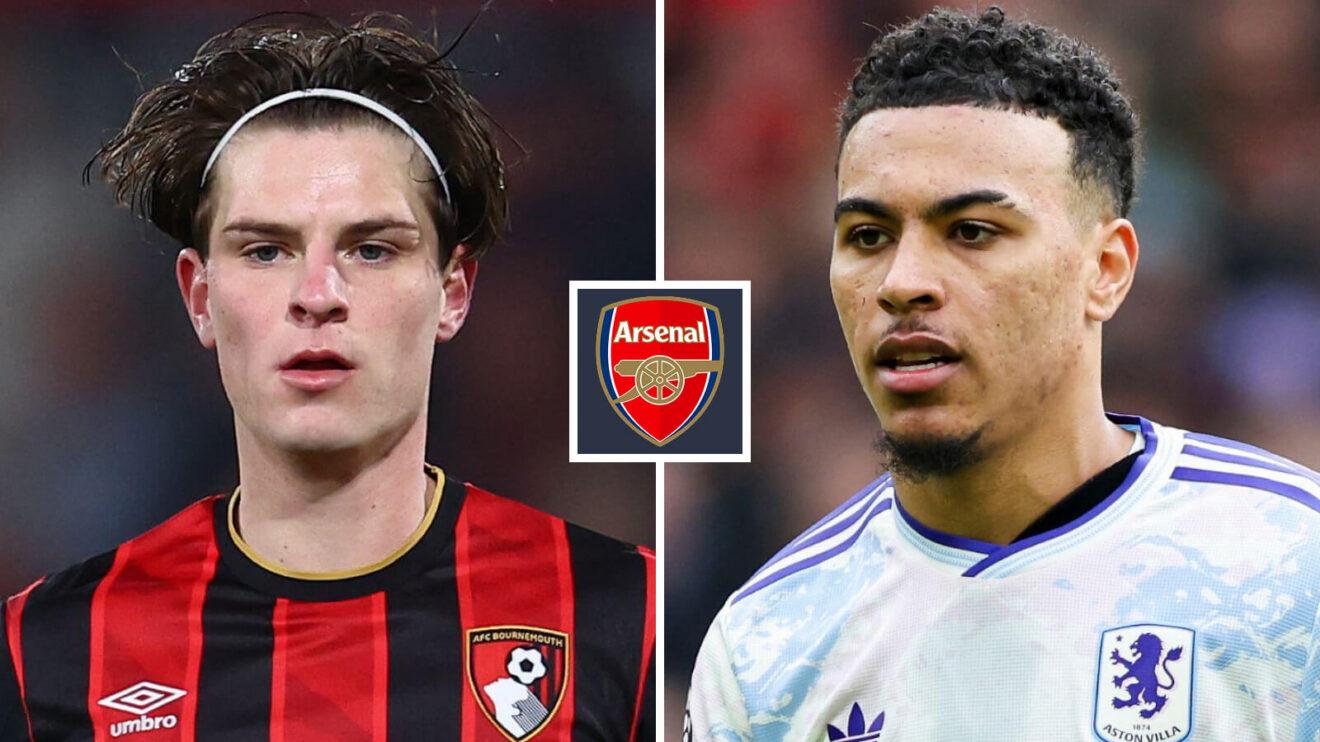
That ambition starts in attack. Internal planning has centred on refreshing the left side of the front line, with Gabriel Martinelli and Leandro Trossard both linked with exits as the hierarchy weighs whether a new profile would unlock more consistency in wide areas. Among the names discussed externally, Aston Villa's Morgan Rogers has risen to the top of the list — not because alternatives do not exist, but because the fit, age curve, and versatility match what Arteta's staff want from a primary wide creator.
Progress on the player, pressure on the price
The most significant development in recent days concerns the human side of the Rogers pursuit rather than the fee sheet. Those close to the situation describe very good progress on the player's side, a phrase that matters in modern deals where personal terms and clarity over role often precede any breakthrough on valuation.
Villa, for their part, have set the market tone early. Reports put their asking price in the region of £130 million, a figure that reflects both Rogers' breakout impact and the broader inflation around elite Premier League attackers. Arsenal have not walked away from the table. Instead, the expectation is that any agreement would require structure — instalments, add-ons tied to performance or qualification, or other mechanisms designed to bridge the gap between club valuations.
That patience does not mean the path is clear. Chelsea have been linked with interest in Rogers as well, and Villa are understood to be aware of multiple suitors. In that environment, Arsenal's reported progress with the player is less a guarantee of completion than a signal that the deal has moved beyond casual enquiry. The next phase will be negotiation under pressure: Villa protecting an asset they do not need to sell, Arsenal trying to land a priority target without compromising the rest of a busy window.
Paris Saint-Germain's Bradley Barcola remains part of the wider conversation as an alternative wide option. He is on the list, but not at the top of it. For Rogers, the obstacle is price; for Barcola, the question is whether he represents the same strategic fit. That hierarchy has shaped how Arsenal have allocated time and senior-level attention in June and early July.
One club official, speaking on condition of anonymity because they were not authorised to discuss live negotiations, framed the Rogers pursuit in practical terms: "When you win the league and go deep in Europe, the market reads you differently. Sellers test you. Agents test you. Our job is to stay disciplined on structure while being honest about what the football department needs."
Midfield reset after Newcastle say no
While the Rogers storyline dominates headlines, Arteta's staff are also working through a parallel brief in central midfield. Last week brought a concrete setback: a bid of around £45 million for Bruno Guimarães was rejected by Newcastle United.
The rejection was not unexpected in tone, even if the timing sharpened Arsenal's need for a Plan B. Guimarães has long been viewed as a profile that could elevate a midfield already built for high intensity — ball carrying, progressive passing, and leadership without theatrics. Newcastle's response effectively closed one door unless a dramatically revised offer arrives, and there is little public indication that the Magpies are inviting another round of talks on their terms.
That outcome pushed Arsenal toward other names in the same position profile. One of them is Alex Scott at Bournemouth. A call was made to gauge whether a move could be realistic this summer. The answer, in short, was that Scott would be difficult to get.
For Bournemouth, that stance is logical. Scott has become central to how they want to play — a midfielder who can receive under pressure, connect lines, and grow into bigger moments. Losing him without a clear replacement plan would weaken a squad that has leaned on youth development as a competitive edge. Arsenal's enquiry therefore reads less like an imminent bid and more like due diligence: understanding price, willingness to sell, and whether any structure could make a deal palatable for a club that does not appear eager to facilitate a rival's rebuild.
A recruitment source with knowledge of the Scott conversation described the tone as respectful but firm. "You ask the question because you have to know the answer," the source said. "Sometimes the answer is not no forever. Sometimes it is no for now. With Scott, the sense was that Bournemouth see him as part of their next chapter, not as a quick sale."
How the two tracks fit Arteta's window
Taken together, the Rogers and midfield threads illustrate the same underlying challenge. Arsenal enter the market with enhanced financial leverage after trophy success, but also with targets who are either expensive, reluctant to leave, or both.
On Rogers, the club appear willing to invest creativity in deal-making because the football case is settled in their minds. On Guimarães, they tested Newcastle's resolve and learned the price of entry. On Scott, they probed a younger route and received a firm signal that Bournemouth will not make the path easy.
None of that means the window is stalling. It means Arsenal are operating in the phase where conversations become structures, and structures become numbers. Arteta's public messaging has consistently tied recruitment to behaviour — players who match the collective work rate and tactical discipline that defined last season. Rogers fits that story as a wide attacker who can combine dribbling with direct goal contribution. Scott fits it as a midfielder who can grow within a demanding environment, if Bournemouth ever soften their position.
The manager's influence on final decisions should not be understated. Arteta has built a culture where new signings are evaluated as much for daily habits as for highlight reels. That filter explains why Arsenal can pursue a high-cost wide target and a younger midfielder in the same window without the moves feeling contradictory. One addresses immediate quality in a position they want to upgrade; the other represents long-term depth in an area where Newcastle just proved how expensive proven excellence can be.
What comes next
The immediate watch points are straightforward. On Rogers, whether Arsenal can convert player-side progress into a fee Villa accept without draining resources needed elsewhere. On midfield, whether Newcastle's rejection forces a renewed push for Guimarães or accelerates interest in Scott and other profiles in the same bracket.
Chelsea's presence in the Rogers race adds urgency, not because a bidding war is guaranteed, but because Villa can use competing interest as leverage in every conversation. Meanwhile, any outbound movement involving Martinelli or Trossard would shape how aggressive Arsenal can be on incomings — squad balance and registration limits still matter even for a champion.
For supporters tracking the window day by day, the picture is neither collapse nor completion. It is the messy middle: progress on one deal, resistance on another, and a club that believes last season proved the project while knowing this summer determines whether that proof becomes a sustained era.
Arteta will not rush announcements for the sake of noise. The pattern so far — steady contact on Rogers, a rejected bid for Guimarães, an exploratory call on Scott — suggests a recruitment team working multiple rails at once. The next fortnight should clarify which rail becomes the first train to leave the station, and whether Arsenal can land the attacker they want at a number they can defend internally.