
















National team transitions rarely unfold in isolation. They sit at the intersection of results pressure, federation governance, and the broader question of what a football country wants its senior team to look like on and off the pitch. Germany's latest coaching change fits that pattern precisely.
Why the Federation Moved On From Nagelsmann
Julian Nagelsmann requested to be relieved of his duties on Thursday, ending his tenure as Germany head coach in the immediate aftermath of a painful World Cup exit. The team fell in the Round of 32 on penalties to Paraguay, a result that cut short a tournament campaign the federation had hoped would signal renewed competitiveness on the global stage.
From an institutional standpoint, that kind of early elimination forces difficult conversations quickly. Federations rarely wait for sentiment to settle when a major tournament ends below internal expectations. Nagelsmann's decision to step aside rather than linger through a prolonged review process reflects how modern national-team environments operate: accountability is public, timelines are compressed, and the search for a successor begins almost in real time.
Germany entered the competition ranked 10th in the FIFA standings and carried credible technical indicators in possession and chance creation during the group phase. Yet tournament football is measured in knockout margins, not aggregate process metrics. A penalty shootout defeat at that stage leaves little room for narrative repair. For a federation with Germany's historical standards, the outcome was enough to trigger a full reset at the top of the coaching structure.
Klopp as the Natural Succession Choice
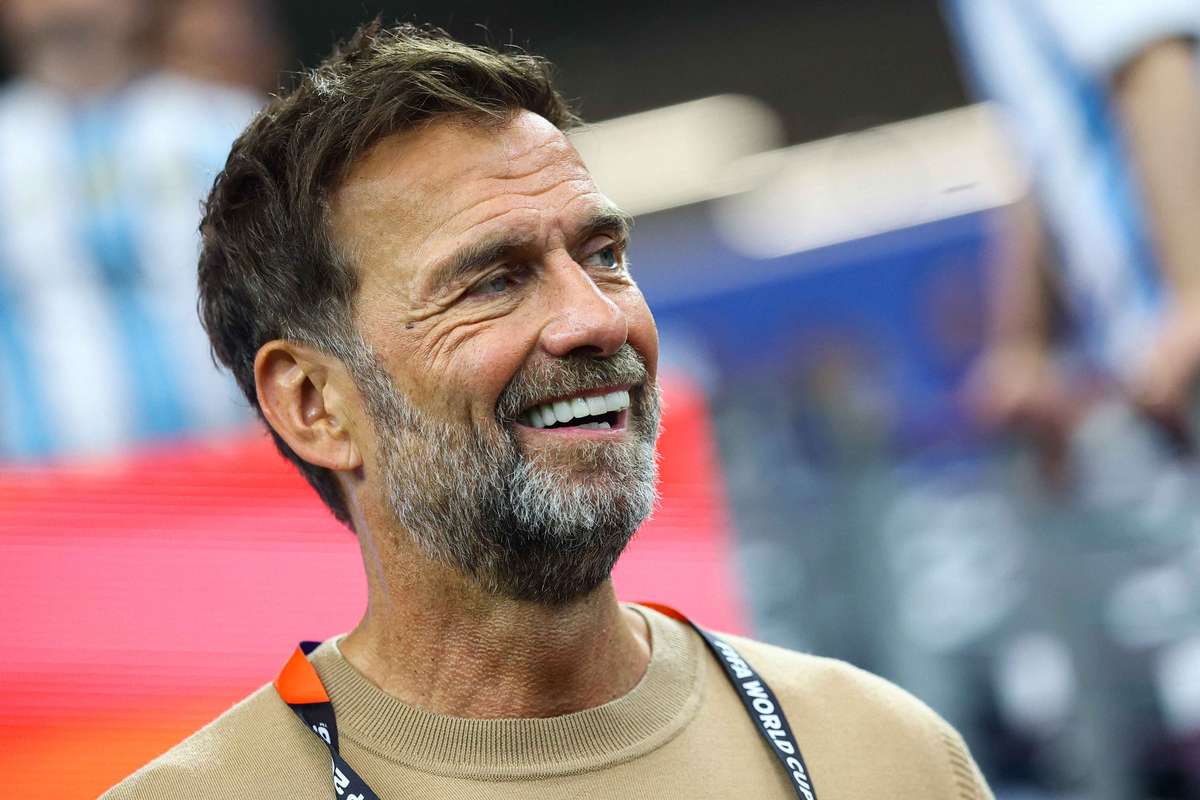
Into that vacancy steps Jurgen Klopp, whose name has dominated the conversation since reports emerged that a deal is effectively in place. Klopp has accepted the role, according to sources close to the process, with Germany preparing to announce their new head coach imminently.
The appointment would represent one of the most striking returns in recent international management. Klopp has been out of day-to-day club coaching since leaving Liverpool at the end of the 2023-24 season, a departure that closed a transformative chapter at Anfield defined by high-intensity pressing, emotional leadership, and sustained trophy contention. Before that, his work at Borussia Dortmund established the tactical and cultural template that made him a household name in European football.
Those two front-line experiences matter when evaluating a national-team appointment. Klopp did not build his reputation in a single environment or with a single player profile. He succeeded with a developing Dortmund side capable of overperforming against wealthier rivals, then replicated and extended that model at Liverpool across multiple market cycles. For educators and coaches studying career pathways, his trajectory illustrates how consistent playing principles can travel across leagues, budgets, and squad constructions.
Since leaving Liverpool, Klopp has worked as Red Bull's Global Head of Soccer, overseeing football operations across the group's worldwide portfolio of clubs. That executive role offered a different lens on the sport: broader structural thinking, multi-club methodology, and distance from weekly match-day pressure. Yet even in that capacity, Klopp remained visibly connected to coaching culture. His comments this week indicated that talks with Germany were underway and that he felt ready to take the national-team job as soon as possible, despite contractual obligations still in place with Red Bull.
What the Role Demands Beyond the Press Conference
Appointing a high-profile coach is only the first administrative step. The harder work begins once the training ground opens under a new identity.
Germany's recent World Cup data underscores both promise and fragility. In two documented group-stage fixtures, the team generated substantial possession and passing volume, yet converted that control into only one goal in each match while suffering defeats. That gap between territorial dominance and decisive finishing is exactly the kind of problem a head coach must address through selection, tactical emphasis, and training design rather than rhetoric alone.
For Klopp, the challenge will be translating club-coaching habits into a national-team calendar with far fewer contact hours. International managers cannot install systems through daily repetition over months. They rely on clear playing principles, strong staff delegation, and players who arrive already aligned with identifiable behaviors. Klopp's press-and-counterpress identity is well documented, but national teams require adaptation: shorter preparation windows, varied player availability, and the need to integrate emerging talents without destabilizing experienced leaders.
From a development perspective, Germany's appointment also signals how federations weigh experience against freshness. Klopp brings immediate credibility in the dressing room and with the public, but he also carries a defined tactical philosophy that players must absorb quickly. That is not a weakness; it is a feature for programs seeking clarity after turbulence. Still, the transition period will test how effectively those ideas can be compressed into international breaks.
Contract Structure and the Red Bull Exit
Reports indicate that while Klopp has agreed to take charge, several practical elements remain under discussion. Long-term contract details, the full scope of the project he will be asked to lead, and the terms of his exit from Red Bull have not yet been finalized in public.
That is common in appointments of this magnitude. National federations and global sporting employers operate on different contractual timelines, and a figure moving from a multi-club executive post back to full-time coaching requires careful legal and operational coordination. The fact that Germany appear ready to announce the hire suggests the core decision is settled even if ancillary paperwork continues.
The 59-year-old's willingness to return despite existing commitments underscores how seriously he views the opportunity. International coaching at Germany's level is not a ceremonial role. It carries expectation tied to World Cup cycles, youth development pipelines, and the federation's public standing. Klopp's stated readiness to begin as soon as possible aligns with the urgency Germany feel after an early tournament exit.
The Glasner Thread and a Shifting Coaching Market
The succession story also intersects with movement elsewhere in the coaching market. Red Bull reportedly considered Oliver Glasner as a potential replacement in their global football structure, but Glasner instead moved toward Nottingham Forest, removing one alternative from the immediate equation.
That detail matters for how we read modern coaching ecosystems. Top managers no longer wait in isolated queues for single jobs. Decisions at club level and international level now ripple across the same talent pool within days. For aspiring coaches observing the market, the lesson is straightforward: reputation, tactical identity, and prior relationships still drive opportunity, but timing and parallel negotiations shape outcomes as much as pure merit.
Glasner's path to Forest and Klopp's reported return to the touchline with Germany illustrate two different models of career reinvention. One involves stepping into a club environment with weekly competitive rhythm; the other re-enters the highest-pressure international stage with a shorter runway to the next major tournament. Both require distinct preparation habits and staff structures.
Institutional Outlook for German Football
If confirmed, Klopp's appointment would mark an extraordinary return for a coach who had appeared settled in a broader football executive role. For Germany, it represents a bet on proven leadership, recognizable playing principles, and the belief that a familiar figure can stabilize a program after disappointment.
The federation's next steps will extend well beyond the announcement itself. Training-camp design, staff appointments, and the integration of younger players into a senior squad built for knockout resilience will define whether this hire becomes a restorative pivot or merely a high-profile reset.
For coaches, educators, and observers of the international game, the case offers a live study in succession planning under public scrutiny: when results fail at the decisive moment, institutions move fast, identities change quickly, and the individuals chosen to lead must be ready to compress years of club methodology into the compressed calendar of national-team football.
Germany appear to have found that readiness in Klopp. The formal introduction may be imminent, but the real examination begins the moment the first training session is planned.