

















The whistle had barely settled into the rhythm of the night when the story England feared began writing itself in the seventh minute. Out wide in the box, Brian Cipenga took the ball as if the entire stadium had held its breath for him alone. Unmarked, calm, he drilled a low right-footed shot that sneaked inside Jordan Pickford’s near post before anyone in white could rearrange the picture. DR Congo led. England, suddenly, were staring at the kind of opening chapter that turns into a long tournament nightmare.
You could feel the shift without needing anyone to say it aloud. In the stands, the traveling support went quiet in that specific way fans do when hope has not vanished but has slipped down a stairwell out of sight. On the bench, bodies leaned forward. On the pitch, England players looked at one another as if searching for the sentence that would make the next eighty minutes make sense.
For a while, the answer never came cleanly. Lionel Mpasi stood between England and panic, turning away efforts that might have changed the mood far earlier. Jude Bellingham tested him. Kane tested him. Each time the Congolese goalkeeper held his ground with the stubborn certainty of a man who understood what this moment meant beyond one save. At the other end, Yoane Wissa struck the post from inside the six-yard area before the break, the sound ringing through the ground like a warning England failed to heed quickly enough.
When the second half arrived, the match felt less like a contest of chances and more like a contest of nerve. Marcus Rashford drove forward with purpose, only for Aaron Wan-Bissaka to throw himself in front of a goalbound effort and deny what might have become the equalizer from an unexpected source. Every near miss tightened the atmosphere. Every blocked path made Kane’s responsibility heavier.
That is the strange burden carried by a captain in a shirt the whole country treats as inheritance rather than clothing. Kane has lived inside that weight for years, through praise, through doubt, through nights when one touch defines a summer. Here, with DR Congo still ahead and the clock thinning, he did not perform anger or defiance for the cameras. He performed patience. He kept arriving in the spaces where a lesser player would have forced the moment too early.
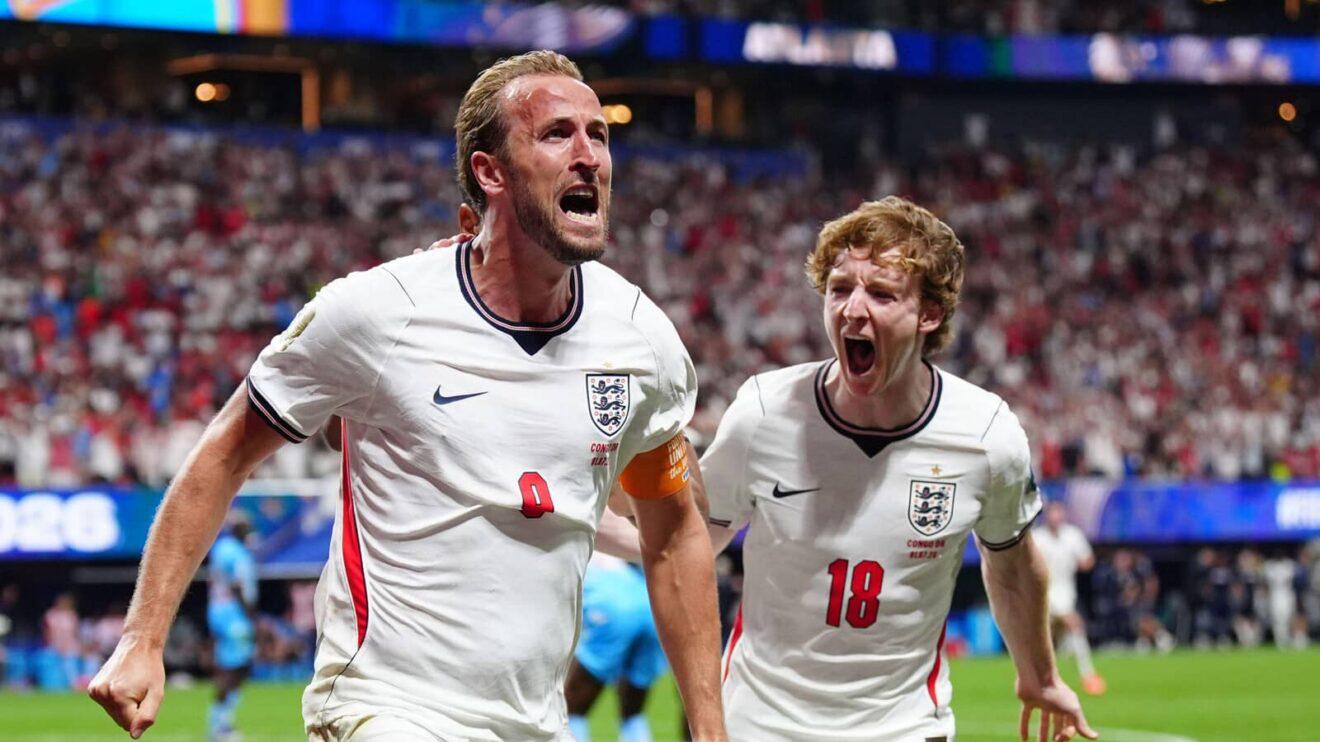
The turning point, when it came, felt earned rather than gifted. In the 75th minute, Anthony Gordon lifted a cross into the kind of corridor strikers dream about in idle hours. Kane peeled away from his marker, found the angle, and headed the ball home. Equalizer. The roar that followed was not only celebration. It was release, the sound of a crowd and a squad exhaling together after carrying the same fear for more than an hour.
What happened next revealed the difference between a team that survives and a team that believes. England did not retreat into caution once level. They pressed with the urgency of a side that had seen how close disaster had come. Gordon’s delivery had unlocked one door; Kane was not finished walking through others.
Four minutes from time, he did it again. Same partnership, same clarity of movement, same captain’s instinct to be where the match could still be decided. Gordon’s cross arrived. Kane spun free, rose, and headed the winner. The stadium erupted in waves, first disbelief, then joy, then the kind of communal noise that binds strangers in the same color for the rest of their lives.
Around him, teammates rushed in not as individuals collecting a result but as a group reclaiming a story that had nearly escaped them. Pickford, who had been beaten early at his near post, was among the first to reach him. Bellingham grabbed his arm. Gordon, the provider on both goals, disappeared into the embrace like a man who understood he had not merely assisted but helped restore belief across an entire camp.
For DR Congo, the night ended in cruel proximity. They had defended with discipline, attacked with conviction, and stood two Kane headers away from a result that would have echoed far beyond one match. Cipenga’s early strike will remain the image of what might have been. Mpasi’s saves will remain the image of how close they came to holding on.
England, though, leave with something more valuable than relief. They leave with proof that their captain can still bend the narrative when the stakes are highest. A World Cup campaign that threatened to begin with its most painful possible sentence instead heads toward the round of 16 and a meeting with hosts Mexico on Sunday at the Azteca Stadium.
On the final whistle, as players walked toward the tunnel, the connection between captain, teammates, and supporters felt visible in plain sight. Fans chanted Kane’s name not as routine praise but as recognition. He had not simply scored twice. He had pulled an entire nation back from the edge of its worst World Cup defeat and given England another week in the story.
Sunday in Mexico City will ask new questions of this team. But on this night, the answer was written in the simplest language football understands: when everything looked lost, the captain found the header that changed everything.