








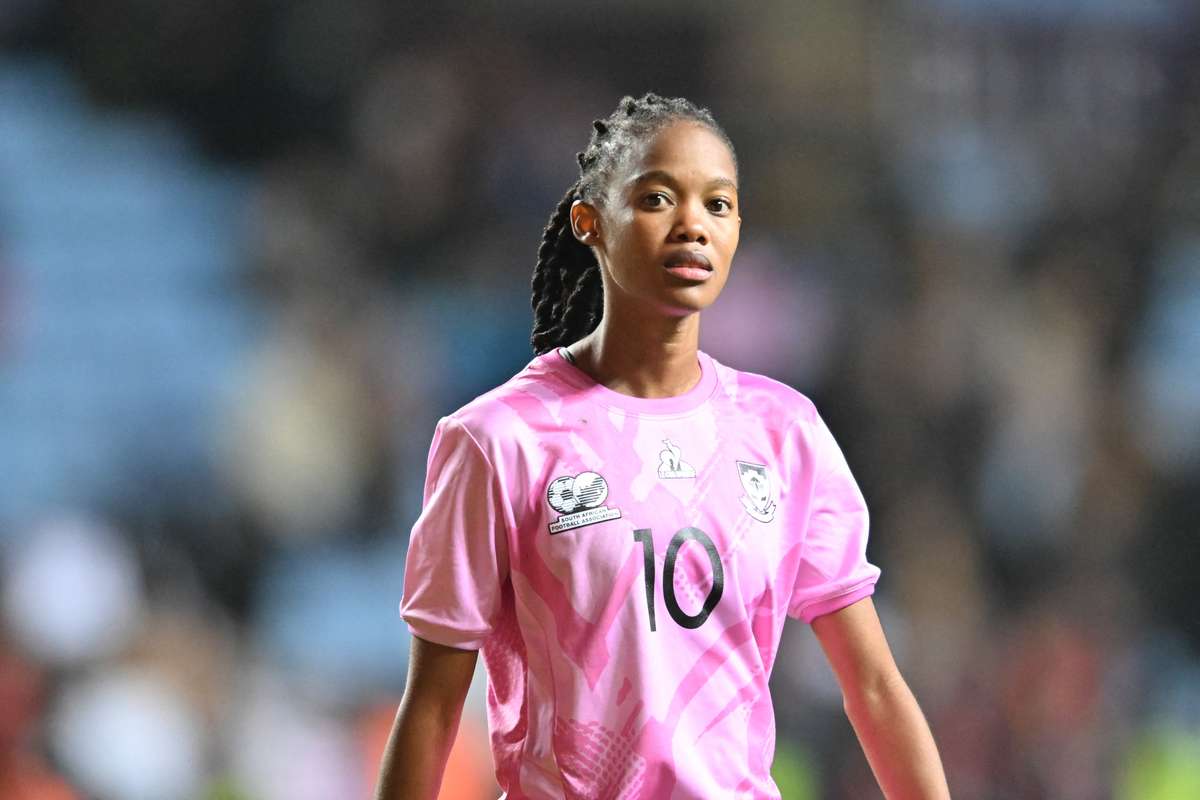
South Africa have locked in their final squad for the 2026 Women's Africa Cup of Nations in Morocco, and the selection reads less like a routine tournament announcement and more like a statement of intent. With the continental championship running from July 26 to August 16 and serving as a direct pathway toward the 2027 Women's World Cup in Brazil, coach Desiree Ellis has chosen a roster built around proven winners, trusted leaders, and two emotionally charged comebacks that could define the mood of the camp before a ball is kicked.
The bottom line is clear: this is not an experimental list. It is a squad shaped for pressure, progression, and the kind of tournament management that continental title holders are expected to deliver.
A Final List Built for Continuity, Not Reinvention
Ellis has leaned heavily on the spine of a team that already knows what it takes to win on African soil. Striker Thembi Kgatlana, midfielders Linda Motlhalo and Refiloe Jane, defenders Lebohang Ramalepe and Bambanani Mbane, and goalkeepers Kaylin Swart and Andile Dlamini all make the cut. That group carries the institutional memory of Banyana Banyana's 2022 triumph and the tactical discipline required to navigate a compressed tournament schedule.
The selection also reflects a broader club footprint. Mamelodi Sundowns remain the deepest domestic pipeline in the squad, supplying Ramalepe, Mbane, Dhlamini, Hadebe, Pila, Cesane, Mthandi, Ludwig, Donnelly, Majiya, and Dlamini. That concentration is not accidental. Sundowns' domestic standards have long acted as the benchmark for South Africa's national team environment, and Ellis has again treated that pipeline as the core of her defensive and midfield structure.
Beyond South Africa's borders, the roster retains global exposure. Motlhalo arrives from Glasgow City, Bongeka Gamede from FC Nordsjælland, Amogelang Motau from Club Tijuana, and Kgatlana from Tigres UANL. Those assignments matter because WAFCON rarely rewards teams that only look cohesive on paper. It rewards sides that can absorb physical intensity, adapt to different tempos, and keep tactical composure when matches tighten in the second half.
The Comeback Narratives That Change the Tone of the Camp
The headline emotional thread in this squad is the return of Robyn Moodaly-Salgado, who had previously retired from football and now rejoins the national setup alongside her spouse, Gabriela Moodaly-Salgado. That is not a sentimental pick for the sake of narrative. It is a selection decision with competitive logic attached to it.
Robyn's return adds another experienced midfield profile to a group that already includes Jane, Motlhalo, Cesane, Holweni, and Nonhlanhla Mthandi. In a tournament where rotation and game management often decide knockout progression, South Africa now have greater flexibility in the center of the pitch without sacrificing the defensive balance Ellis typically demands.
Gabriela Moodaly-Salgado's Road Back
Gabriela's inclusion carries even greater weight because of what happened at the previous WAFCON, where she suffered a horrific broken leg. For any player, that kind of injury threatens more than match fitness; it threatens confidence, rhythm, and the willingness to compete in contact-heavy phases of play. Her presence in this squad is therefore a marker of resilience, not only individually but collectively.
Banyana Banyana have often drawn strength from players who understand adversity, and Gabriela's recovery arc fits that identity. If she arrives in Morocco fully ready to contribute, she gives Ellis another trusted option in midfield and reinforces the idea that this team remains connected to the emotional core of its recent history.
Hildah Magaia Remains the Reference Point Up Front
The other major selection talking point is striker Hildah Magaia, currently unattached but impossible to ignore because of what she already achieved in this competition. Magaia scored both goals in the 2022 final against Morocco, delivering South Africa's only continental title to date and cementing herself as the reference point in attack.
Her club situation does not erase tournament pedigree. At this level, finals experience is a currency of its own, especially for a team that may need a finisher with the calm to convert under fatigue and expectation. Including Magaia sends a direct message: Banyana Banyana are not building toward a future identity in Morocco. They are defending a standard already established.
Goalkeeping Stability and Defensive Depth
Between the posts, Swart and Dlamini remain the first-choice pairing, with Kebotseng Moletsane included as additional cover. That trio suggests Ellis is prioritizing reliability over novelty in the position where mistakes are least forgivable.
Defensively, the squad is both deep and familiar. Ramalepe and Mbane offer continuity, while Maponya, Hadebe, Dhlamini, Pila, and Mhlongo give Ellis multiple combinations depending on opponent profile. Against physically direct African opposition, that depth could prove decisive across three group games in a short window.
Recent international form has shown a run of 0-0 outcomes in World Cup qualifying activity, which underscores a current profile built more on structure and control than open firepower. That may not fully translate to WAFCON, where knockout tension and game state force different choices, but it does suggest a team comfortable limiting damage and staying organized. In Group B, that trait may matter as much as attacking flair.
Group B Presents an Immediate Progression Test
Banyana Banyana have been drawn in Group B and open against Tanzania in Casablanca on July 27. Four days later they face Ivory Coast, before closing the group against Burkina Faso on August 4.
On paper, the opening match against Tanzania should offer South Africa a chance to settle into tournament rhythm, but the true stress points arrive quickly afterward. Ivory Coast represent the kind of opponent that can punish slow starts with directness and transition speed, while Burkina Faso have enough collective organization to make the final group fixture uncomfortable if points are still at stake.
The format itself adds pressure: the top two teams in each pool advance to the quarter-finals. There is no margin for a prolonged feeling-out process. South Africa must arrive in Morocco with tactical clarity from the first whistle, particularly because the broader prize is not only continental honor.
Morocco Is More Than the Host Venue
This edition of WAFCON carries extra strategic weight because it doubles as qualification for the 2027 Women's World Cup. The four semi-finalists advance directly to the global finals, while two additional teams will still have a route through intercontinental play-offs.
That structure raises the stakes for every knockout decision. A squad that reaches the last four not only stays alive for African glory but also secures the cleanest path to Brazil. For South Africa, a nation that has already crossed the continent's ultimate threshold once, the objective is no longer simply participation. It is to remain among the teams that define the standard in African women's football.
Morocco's role as host adds another layer. The 2022 final between these nations created one of the competition's defining recent storylines, and Magaia's history in that match gives South Africa a psychological reference point should paths cross again later in the tournament. Even if they do not, playing on Moroccan soil in a World Cup qualifying cycle ensures every opponent will treat Banyana Banyana as a benchmark side rather than a surprise contender.
Reading the Full 23 Through a Competitive Lens
Goalkeepers: Swart, Dlamini, and Moletsane. Defenders: Ramalepe, Mhlongo, Dhlamini, Hadebe, Mbane, Maponya, and Pila. Midfielders: Gamede, Cesane, Gabriela Moodaly-Salgado, Motlhalo, Mthandi, Jane, Holweni, Ludwig, Robyn Moodaly-Salgado, Motau, and Magama. Forwards: Magaia, Kgatlana, Donnelly, Majiya, and October.
That breakdown confirms Ellis has not chased novelty for its own sake. The bench still contains players with university and domestic league backgrounds who have been part of recent cycles, which matters when travel, heat, and recovery windows compress across a three-match group phase. Ronnel Donnelly, Nthabiseng Majiya, and Zoe October provide forward depth behind Magaia and Kgatlana, while Sibulele Holweni and Fikile Magama extend midfield cover without forcing a system change.
The result is a squad that can rotate without losing its identity. That is often the difference between a team that wins one signature game and a team that survives the full arc of a continental tournament.
What This Squad Says About South Africa's Direction
Taken together, the final 23 paint a coherent picture. Ellis has kept her leadership group, preserved a strong Sundowns base, retained overseas experience, and added comeback stories that can energize a camp without compromising competitive seriousness.
The squad also avoids the trap of overreacting to short-term noise. Jane remains central. Kgatlana remains the headline attacking threat from abroad. Swart remains the first-choice goalkeeper. Magaia remains the player most associated with Banyana Banyana's greatest night.
That consistency is the real story behind the announcement. South Africa are not entering WAFCON 2026 as a team searching for identity. They are entering as defending champions with a roster designed to manage emotion, control games, and advance in a format where the semi-final line is the difference between continental success and a longer, harder road to the World Cup.
Verdict
This is a strong final squad because it balances experience, depth, and narrative without losing tactical discipline. Robyn Moodaly-Salgado's return and Gabriela Moodaly-Salgado's recovery add human momentum, Magaia and Kgatlana provide proven match-winning quality, and the Group B schedule will quickly reveal whether South Africa's blend of domestic structure and overseas exposure is enough to remain among Africa's elite.
If Banyana Banyana start fast in Casablanca and take maximum points from the fixtures against Tanzania, Ivory Coast, and Burkina Faso, they will move into the knockout phase with the platform this selection suggests they deserve. Anything less, and the conversation will shift from squad quality to game management under the highest continental pressure.