
















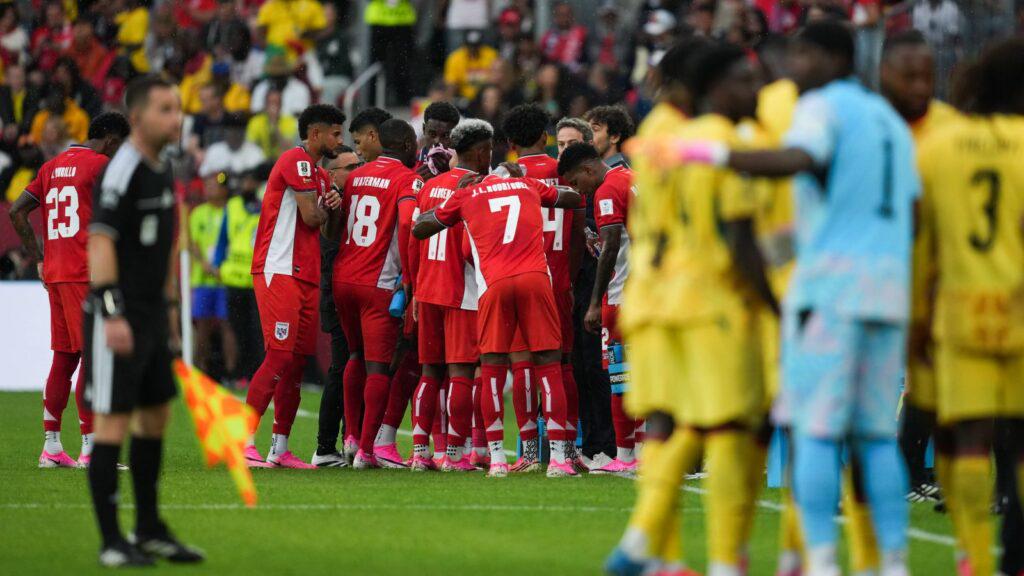
The 2026 FIFA World Cup will be jointly hosted by the United States, Canada, and Mexico. A rule that might seem like a mere "logistical detail" is quietly reshaping the rhythm of matches—mandatory three-minute hydration breaks in each half of every game, no longer tied to temperature or humidity thresholds. Based on the information we have gathered, this is not merely an upgrade to player-protection provisions; it could also reshape broadcast windows and in-game tactical battles.
From "On-Demand" to "Standard at Every Match"
Hydration breaks are not a traditional fixture of World Cup play. The mechanism first appeared at the 2014 FIFA World Cup in Brazil, when it was triggered only when heat and humidity exceeded set thresholds—essentially an emergency measure for extreme weather. Yet almost from its inception, it was never just about "drinking water and resting."
The 2014 Round of 16 clash between the Netherlands and Mexico became a classic case study. Dutch head coach Louis van Gaal used the cooling break to switch formations, shifting from a 4-3-3 to an alternate attacking setup; the team scored twice shortly afterward to come from behind and advance 2-1. Van Gaal said afterward that the break was a window to "use the rules smartly"—tactical adjustments, energy management, and information transfer could all be handled during a fixed stoppage, with the opponent given the same opportunity.
2026 Rules: Three Minutes, Every Match, Every Half
On December 7, 2025, FIFA officially announced that at the 2026 World Cup, every match—regardless of weather conditions—will include one mandatory hydration break in each half, fixed at three minutes; even if both teams and the referee are ready to resume, play cannot restart until the full allotted time has elapsed. The official statement stressed "player welfare" and "parity for all teams and all match conditions," aiming to eliminate the previous imbalance where some games had breaks and others did not.
For host nations the United States, Canada, and Mexico, summer schedules may still bring intense heat and cross-time-zone fatigue; the fixed pause offers a predictable buffer for fitness management. For non-host teams, it means building six minutes of additional stoppage time into preparation and rotation planning.
Broadcast Advertising: The "Hard Constraint" of 20 and 30 Seconds
The rules text did not spell out the commercial arrangements in the initial announcement, but subsequent details made it clear: broadcasters may insert advertisements during hydration breaks in both halves. Specific restrictions apply—no ads may be cut in until at least 20 seconds after the break begins, and at least 30 seconds of ad-free buffer must remain before play resumes. That works out to a theoretical ad window of roughly four minutes per match, spread across the middle of each half, shifting away from the traditional model of concentrating ad inventory at halftime alone.
On the ground, however, execution has already diverged from the plan. During the opening-match broadcast, the primary rights holder failed to preserve the full 30-second buffer before restarting play, effectively missing the on-field restart window by about a minute and fueling debate over the tension between "rule rigidity" and "commercial pacing." If player-protection provisions fall out of sync with broadcast scheduling, the three-minute pause could drift from a "fair stopped-clock interval" into a source of extra uncertainty.
Tactics and Viewing: Who Really Benefits?
From a hard-data standpoint, a fixed six minutes of stopped time amounts to two extra "mini halftimes" for each side. For possession-oriented teams and sides that lean on high pressing, the pause can help slow the slide in fitness levels; for trailing teams, it becomes a legitimate window to reset attacking patterns and change the player pulling the strings. Van Gaal's 2014 example showed that the pause is valuable not for the water break itself, but for whether the coaching staff can get meaningful adjustments done inside 180 seconds.
For viewers, the rhythm splinters into four shorter movements: opening spell—pause—resumption—halftime—pause—run-in. Goals scored on either side of a pause would only magnify the drama and the room for tactical interpretation. Through the group stage and knockout rounds ahead, one thing is worth watching closely: which teams will build the pause into their regular tactical playbook, and which will still treat it as nothing more than a rest stop.
What to Watch Next
Our take: The mandatory hydration breaks at the 2026 World Cup are a bundled trial of three intertwined priorities—player welfare, competitive fairness, and broadcast commercial interests. With the rule now fixed at three minutes per half in every match, teams must use the warmup phase to rehearse substitutions, formations, and set-piece routines during these stoppages. If broadcasters keep breaching the 20-second/30-second limits, whether FIFA adds penalties or revises the guidelines will become another subplot orbiting the tournament. For fans, there is only one number to remember—beyond the 90 minutes, there are six fixed minutes that could decide the outcome of a knockout match.