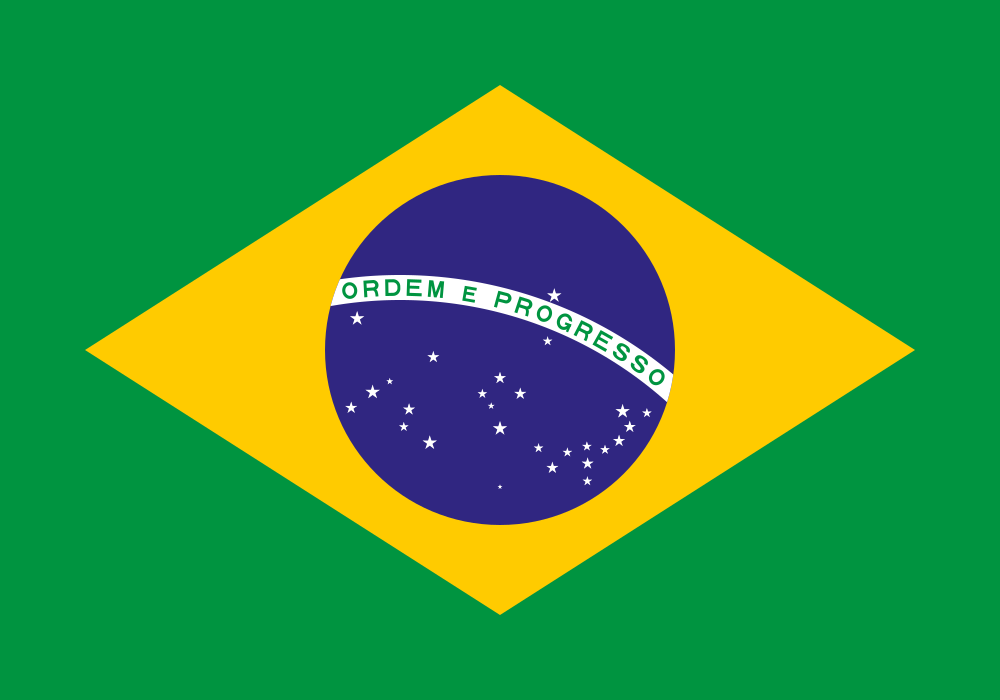






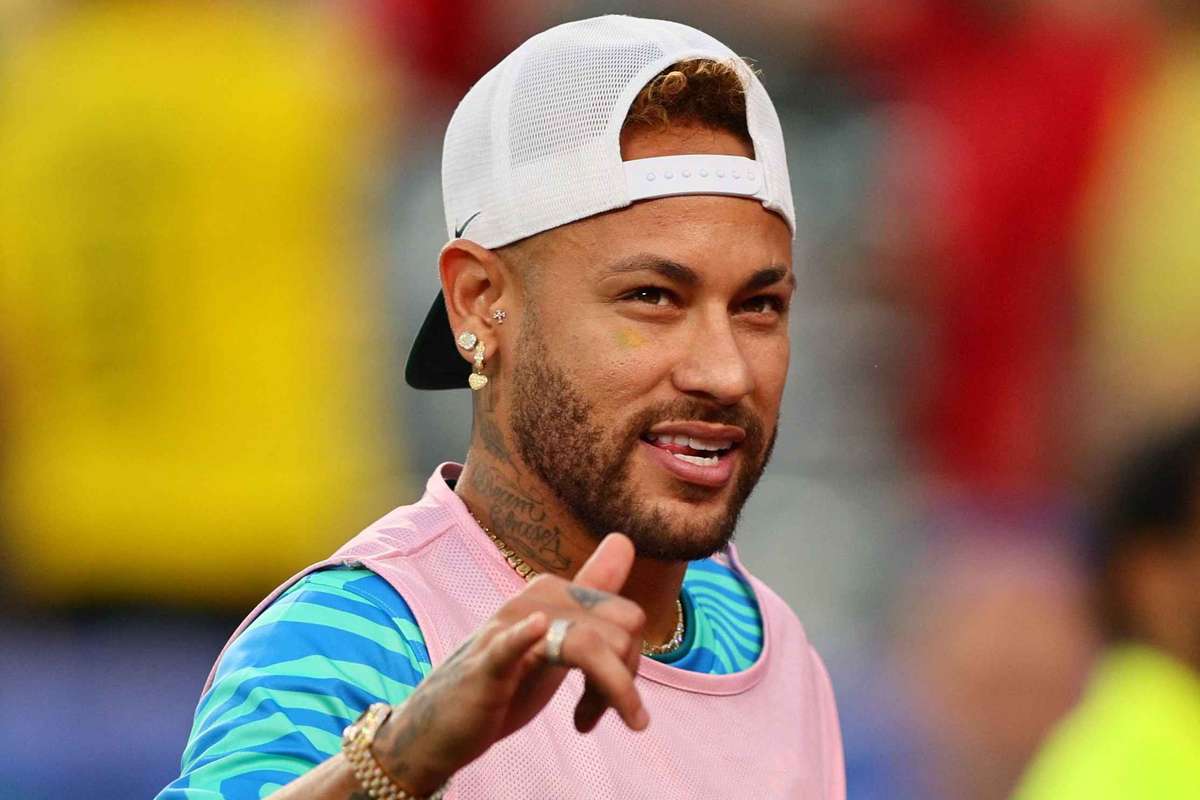
According to information we have obtained from the front lines, 34-year-old Neymar has returned to the pitch at the New Jersey training base, completing running and ball-contact recovery work. However, Brazil's leading attacker has not yet trained with the full squad, and his prospects of playing in the second World Cup group-stage match against Haiti remain unclear.
From the medical team to the pitch: the comeback has only taken the first step
The session was closed to the media. The Brazilian Football Confederation reported that Neymar underwent physical recovery work on the field and engaged in limited ball work. This marked his first return to the official training pitch from the indoor rehabilitation area since injuring his right calf—over the previous weeks, he had been completing strength and range-of-motion work indoors alongside physiotherapists and fitness coaches.
For Brazil, the symbolic significance of this step outweighs its tactical value. Being able to tolerate changes of direction and ball-contact loads on grass indicates the injury has not worsened; but there remains a clear gap before he is "match ready." Sources close to the national team revealed that the coaching staff are deliberately slowing the pace, with no intention of forcing a gamble on a number 10 who has been out of action for so long during the World Cup group stage.
Injury chain and a three-year national-team absence
This right calf issue originated in last month's match when Santos lost 3-0 to Coritiba. It was one of Neymar's few appearances since returning to the Brasileirão, but he collapsed again during high-intensity contact. For a 34-year-old attacking centerpiece with a lengthy injury history, repeated calf muscle strains often signal a temporary decline in explosive acceleration and continuous change-of-direction ability—this is not a matter of mentally "wanting to play enough to play," but rather a biomechanical recovery window.
The more troubling issue is the timeline: Neymar has not logged official minutes for the Brazilian national team in nearly three years. In the World Cup opener against Morocco, Brazil drew 1-1, lacking a consistent ball-carrying, line-breaking core in attack, and the rhythm of play felt fragmented. If he cannot feature against Haiti in the second match, Brazil's creativity gap in the link between midfield and the wide areas will be difficult to fully bridge through ad hoc adjustments.
Tactical Perspective: What's Missing Isn't "A Name," But an Attacking Link
From a positional standpoint, Neymar's value in Brazil's system has never been limited to individual dribbling. He habitually drops between the midfield line and the front line to receive the ball, using his first touch to push speedy wide players forward, while holding possession in the half-spaces to draw defensive attention and create openings for late runners from deep. Against Morocco, Brazil repeatedly found themselves stuck in a "someone dribbling, nobody making runs" stalemate around the edge of the box—the classic symptom of lacking a fixed No. 10 playmaker.
Neymar has yet to join full-team tactical drills, meaning he hasn't even realigned with teammates on the most basic set-piece assignments, pressing triggers, and counterattack runs. The World Cup group stage moves at breakneck pace, leaving virtually no room for players to "find their rhythm on the fly." If the coaching staff opts for caution, the more realistic window is the training period after the Haiti match and before potential knockout opponents emerge—but that too hinges on remaining injury-free throughout.
Pressure Test After the Morocco Draw
The 2026 World Cup will be jointly hosted by the United States, Canada, and Mexico. As a traditional powerhouse, Brazil's failure to win their opening group match has already amplified pressure in the media narrative. Haiti is not a traditional heavyweight, but on the points table, any further slip could complicate the battle for the group top spot and, in turn, affect the knockout stage path.
Against this backdrop, Neymar's return to grass training has indeed reignited fan expectations. However, between "stepping onto the pitch" and "making the squad and assuming a core role" lies complete tactical integration, intra-squad scrimmages, and at least one full-intensity, match-level physical test. Sources close to the team stress that the medical staff and coaching staff evaluate daily and will not rush the recovery timeline for a group stage match.
Projection: The Most Likely Selection Logic for the Second Match Against Haiti
If Neymar misses the match against Haiti, Brazil will most likely stick with the framework from their opening game, using pace on the flanks for vertical thrust while the midfield adds long-range efforts off second balls and runs into the half-spaces. That approach works against weaker sides, but against compact defences, the lack of a “final-pass decision-maker” in the final third makes conversion rates prone to swings—the Morocco game already served as a warning.
Conversely, if he suddenly joins full training within 48 hours of kick-off, the coaching staff are more likely to keep him on the bench for a controlled 20–30-minute cameo to test his body’s response, rather than start him for a full 90 minutes. Based on current information, the latter scenario appears less likely.
What to Watch Next
This site recommends keeping a close eye on three signals: first, whether Neymar begins taking part in 11-on-11 tactical drills with the first-team group; second, whether he shows noticeable limping or requires icing after training; third, whether the Brazilian FA lists him as “available” at the pre-match press conference. As long as he has not completed tactical integration in training, talk of him playing against Haiti remains premature. For Brazil, the real test is not squad selection for a group-stage match, but how to reintegrate a No. 10 who has been absent from the national team for nearly three years into a high-intensity tactical system over the World Cup cycle—it is not just about pace, but even more about rhythm management and risk control.