









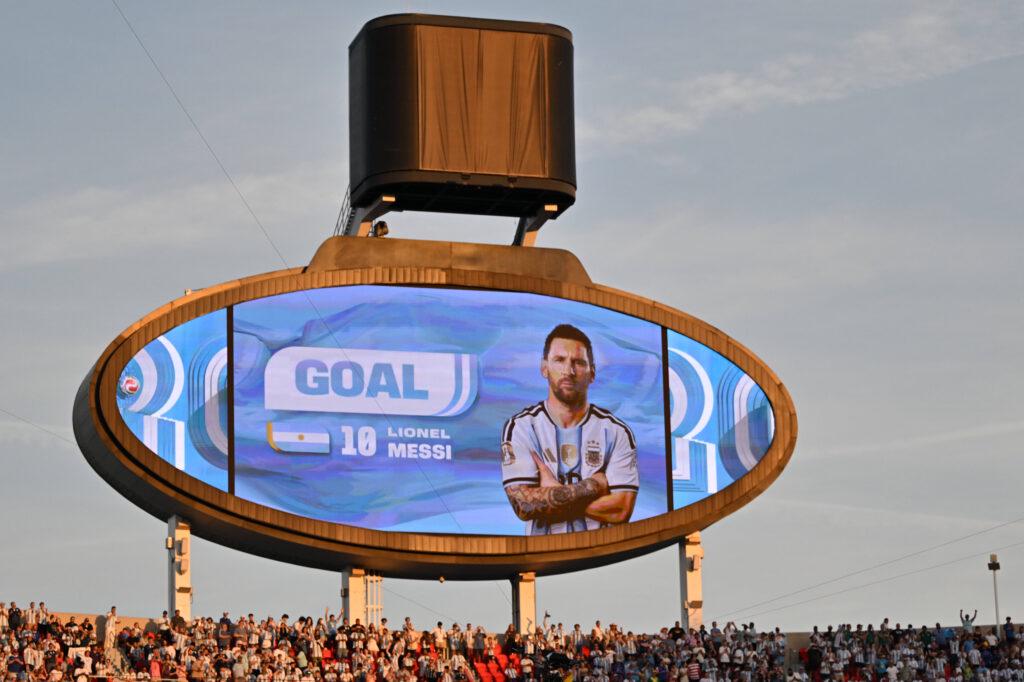
The 2026 FIFA World Cup is officially underway across the United States, Canada, and Mexico. After the opening round, the Golden Boot race already has a clear shape: Argentina star Lionel Messi and Canada forward Jonathan David are tied at the top with three goals each, while twelve players sit one behind on two — and the scoring chart turned fiercely competitive from day one of the group stage.
Opening Round Wrap: The Tone Set on Matchday One
For many families, the World Cup’s first round is the moment to pin the schedule to the fridge and gather around the TV. With the expanded 48-team format and a tighter calendar, early scorers gain not only personal prestige but also become the shared talking point in every neighborhood chat. Messi and David’s three-goal starts are exactly the kind of “fast-start” benchmark that sets that tone.
Messi continues to play the central finisher in Argentina’s box; penalty duties and set-piece threat give him a steadier route to goals. David carries a similar load for Canada, taking penalties regularly and excelling at near-post runs — and for one of the host nations to produce a Golden Boot leader after the opening round is a direct boost to local match-day buzz.
The Two-Goal Cluster: Penalties, Set Pieces, and Cut-inside Shots
The next tier is a crowded group of twelve on two goals: Ilia Jast, Yassine Ayari, Kai Havertz, Harry Kane, Erling Haaland, Kylian Mbappé, Vinícius Júnior, Matheus Cunha, Ismaël Saibari, Folarin Balogun, Cyle Larin, and John Manzambi. This group shows a clear split in how they score — some from twelve yards, some from set pieces, and others by cutting in from wide areas to generate volume.
Kane and Havertz typically take penalties for their national teams, while Mbappé and Haaland rely more on high shot volume in open play. First-round goals often cluster in high-pressure periods, and these players can secure penalty-taking duties or primary shooting roles from the opening stages—which explains why the Golden Boot race quickly took on a structure of three leaders on three goals and a pile-up at two. For young players, this list also carries symbolic weight: veterans and the next generation share the same table, and the paths to scoring are far from uniform.
Expanded format: One more knockout round raises the ceiling
This World Cup uses 12 groups of four teams, with three group-stage matches per side; a round of 32 follows, then the conventional knockout bracket. In theory, a player who reaches the final could play as many as eight matches—one more than in previous editions—a tangible boost to the total-goals ceiling for elite strikers.
A longer schedule also makes fitness and minutes management a new variable in the Golden Boot race. Stars at big nations who rotate less and go deeper naturally get more scoring windows; in the knockout phase, open-play chances often shrink, further amplifying the value of designated penalty takers.
Tiebreaker rules and what to watch: Efficiency beats volume
The official tiebreaker order is: goals first, then assists, then fewer minutes played ranks higher. That means "efficient finishers"—those who convert chances and supply the final pass at key moments—have an edge when the standings are tight.
Looking back at the opening round, three Golden Boot storylines have already emerged: whether Messi can keep delivering steadily through penalties and set pieces; whether David can ride host-nation scheduling and home atmosphere to carry an early lead into the knockouts; and whether the two-goal cluster around Kane, Haaland, Mbappé and others can overturn the leaders with open-play output from the second round onward.
For ordinary viewing families, what’s worth tracking next isn’t just the total goals—it’s also who’s still on penalties and who’s seeing more concentrated minutes in the knockout rounds. Once the Round of 32 bracket is set, the “path gap” between powerhouse stars and sharpshooters from weaker sides will show up faster: the former lean on squad depth and volume of games, the latter on single-game explosions and spot-kick production.
Our reporting from the ground shows the early Golden Boot table is more like a stress test: the expanded format stretches the runway, early scorers grab a head start, but the two-goal club is crowded enough that any final group-stage match or Round of 32 tie could rewrite the top spot. If you’re watching the World Cup with your kids, try using DAVID and Messi’s goal patterns as a side-by-side sample—one built on near-post timing and penalties from the spot, the other on star status and set-piece insurance—while the rest show how open-play finishing, cutting inside from the flanks, and set-piece threat can all run in parallel. The Golden Boot race has only just begun; the real dividing line is still ahead.