

















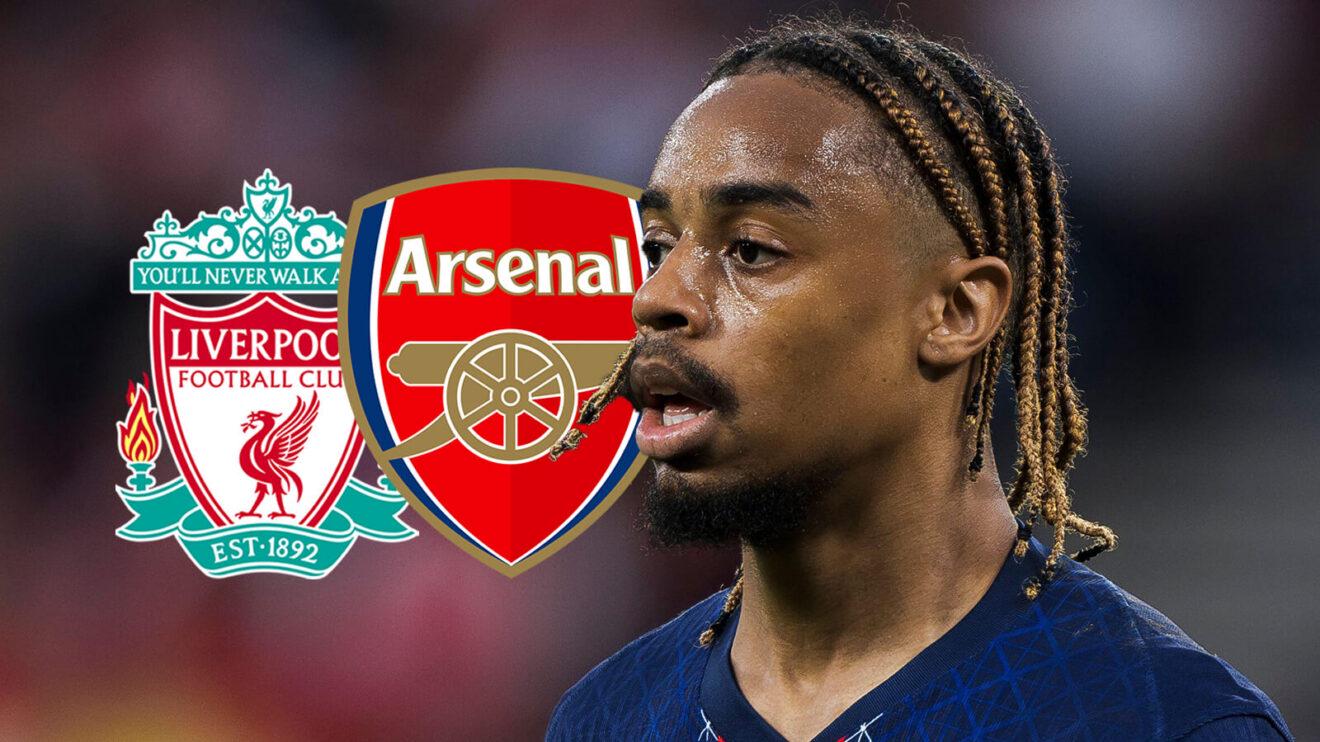
According to our sources on the ground, 23-year-old French winger Bradley Barcola has formally submitted a transfer request to Paris Saint-Germain. Meanwhile, Liverpool and Arsenal are both on standby, ready to move at any moment for this pacy wide player. For an attacker still on an upward trajectory, this proactive stance means the transfer-window maneuvering has moved from the rumor mill into substantive advancement.
Strong numbers, but pecking order keeps slipping
The heart of the issue is not a lack of contribution from Barcola this season. The numbers show he has made 49 appearances across all competitions in 2025-26, scoring 13 goals and providing 7 assists—a solid return for a winger. However, under Luis Enrique, his place in the pecking order has clearly fallen behind Ousmane Dembélé, Khvicha Kvaratskhelia and Désiré Doué, three players who have effectively locked down the core rotation framework in PSG's attack.
For a player like Barcola, whose game is built on pace and cutting inside, minutes are the fuel for development. At 23, this should be a critical window for his tactical standing to rise steadily, but spending prolonged spells on the bench erodes match rhythm, trust in big games and leverage in contract talks all at once. From a development standpoint, what he needs is not the occasional flash of brilliance, but a stable platform as a starter; when a club's tactical resources are concentrated around more established core players, young talents are most likely to lose patience in a quietly unfolding competition—and that is the underlying logic behind the current situation.
Champions League turning point: left out of starting XIs in semi-final and final
The direct catalyst that pushed Barcola to make up his mind about leaving emerged late in Paris's Champions League campaign this season. According to information at our disposal, although the team ultimately lifted the trophy, Barcola was left out of the starting lineup in both the semifinal and the final, leaving him with a sharp sense of disappointment over his prospects for playing time going forward.
For a player, a winner's medal can attest to collective success but cannot replace personal presence in key battles. Being omitted from the starting lineup in consecutive elite fixtures is often read as the coaching staff's verdict on his "big-game role"—once such signals cluster at the end of a season, the urge to leave is usually hard to dispel with words alone. Barcola's intention to depart has now been communicated clearly to Paris; while the club retains leverage under his existing contract running to 2028, renewal talks had not progressed smoothly before, and a sale has not been ruled out entirely.
Liverpool and Arsenal: Two Premier League Giants with Different Calculations
Liverpool's Side: The Pressure for a Wing Overhaul Is Real
Liverpool see Barcola as a potential signing target, with the logic rooted in possible changes to their front-line core structure. Mohamed Salah's future remains uncertain, forcing Liverpool to stockpile wide options with one-on-one dribbling and finishing ability ahead of time. Barcola's pace, tendency to cut inside, and experience in both Ligue 1 and the Champions League make him a better fit than some alternatives at a similar price point for the dual requirement of immediate impact and upside.
From Liverpool’s recent run of form, the club have drawn repeatedly in the closing stages of the Champions League and the final stretch of the league this season. In attack, they have lacked a decisive game-changing option at key moments, which has only heightened the management’s urgency to strengthen on the flanks. Anfield needs more than numbers in rotation—it needs explosive players who can shift the balance in top-level clashes.
On the Gunners’ side: the winger upgrade window opens in tandem
Arsenal have also placed Barcola on their priority shortlist, with the aim of upgrading the front-line wide options as a whole. In the current setup, Gabriel Martinelli and Trossard remain important pieces, but the club need a top-tier winger capable of starting consistently at Champions League knockout level to match title-challenging tactical intensity. If Barcola were to join, the competition would go directly for starting spots rather than simply adding depth to the bench.
Worth noting is that Arsenal are still pushing related talks, but Paris are currently inclined to keep him for now. That suggests the early summer window is more likely to involve a three-way tug-of-war—player wanting out, buyer waiting, seller watching—rather than a straightforward deal sealed by a single bid.
What to watch next: stay or go hinges on Enrique’s selection signals
Based on information from various sources, the dividing line for this potential transfer lies not in the player’s numbers but in whether Paris are willing to offer Barcola a tangible tactical commitment in the new season. If Enrique continues to position him as an impact option for specific scenarios, a departure is almost inevitable; if the club can clarify his place in the core rotation during the preseason and reopen contract talks, the situation could still swing back.
For Liverpool and Arsenal, the real window of opportunity may open once Paris’s internal assessment begins to soften — both clubs are poised to move, but whether they succeed will hinge on three factors combined: the player’s resolve, the asking price, and how aggressively rivals intervene. Once the summer window opens, Barcola’s destination will become an important test case for how Premier League giants approach rebuilding on the flanks: whether to bet on proven, ready-made quality or free up budget for a younger core. The answer should become clearer soon.