

















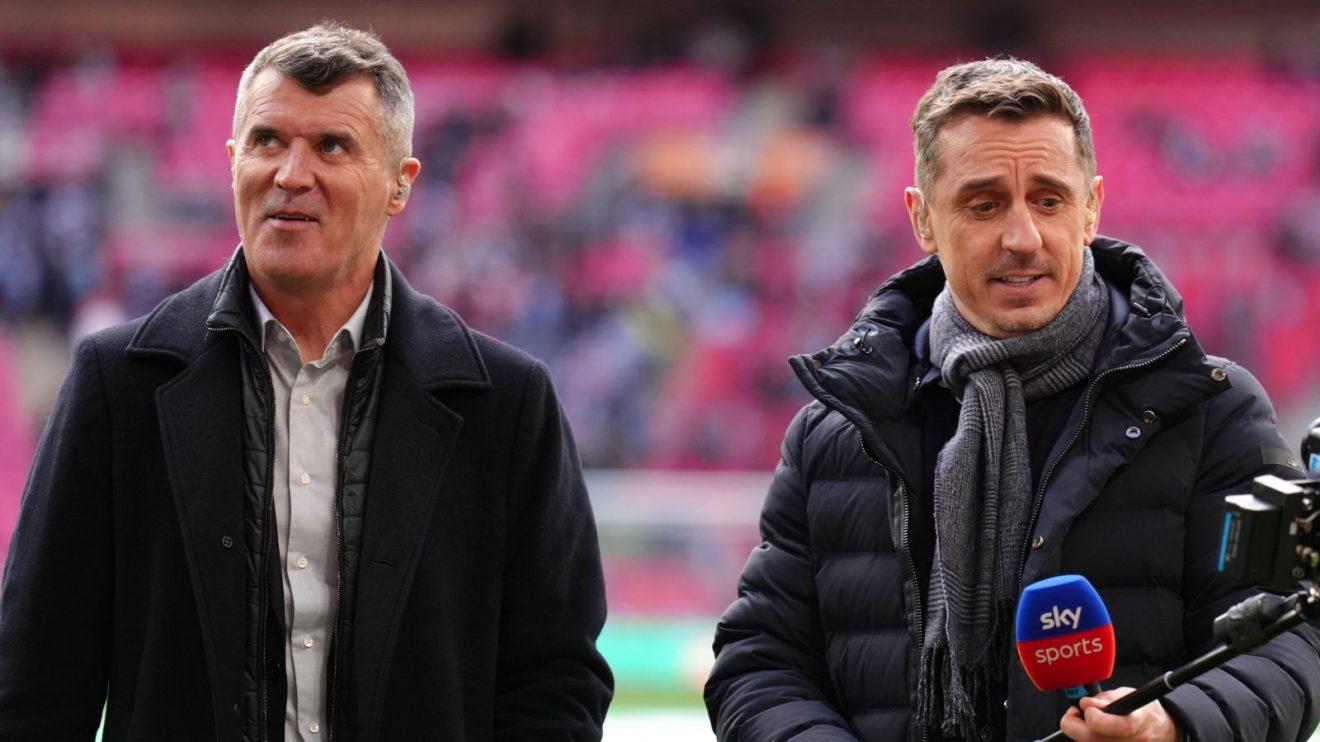
Manchester United beat Brentford 2-1 on Monday night, and that was the final score—but in the Sky Sports studio, Roy Keane and Gary Neville were at loggerheads over interim boss Michael Carrick's half-time tactical changes. Beyond the win itself, the argument put "how you win" and "whether praise is due" squarely on the table.
The half-time turning point behind a 2-1 win
The match report made it clear: United led 2-0 at the break, conceded once after the restart, and were outscored 1-0 in the second half while still winning 2-1 overall. Brentford had gone five or six games without a win before kick-off; on paper, with United two goals up in the first half, this looked like a "control the tempo and see it out" script.
Keane's fire was aimed squarely at that half-time reshuffle. On the show he said Carrick deserved credit for the win, but he could not accept praise for tactical genius when "on Monday night he switched to another system and they conceded in the second half": "You're 2-0 up at half-time, the opposition are off form, and people say his half-time changes were brilliant—then you lose the second half 1-0 and still get a thumbs-up? I have to draw a line there; that's a bit much."
By the numbers: nine wins in 13 and the "way you win"
Set the row in season context: since taking the interim job, Carrick has overseen 13 matches with nine wins; United's floor this season is fifth place—they cannot drop any lower. Those figures show he did pull the club back onto a points path out of the turmoil, but Keane's issue is not the results table—it is whether "results equal a tactical textbook."
From an efficiency standpoint, leading 2-0 but conceding a net one goal in the second half suggests at least one slip in transition play, pressing distance or shape width after taking the lead; if praise focuses solely on “daring to change formation” while ignoring the risk of conceding after a tactical switch, analytically minded readers will struggle to buy it. Recent fixtures on the site also underscore that Manchester United have not been dominant week in, week out: a narrow 3-2 home win in Gameweek 37, a 0-0 away draw in Gameweek 36, and a 0-3 away defeat in Gameweek 38 — volatility remains, and Carrick’s value lies more in “salvaging results” than in ruling the data in every game.
Neville: Not changing formation might have been more dangerous
Neville fired back on the spot: “If they had stuck with the system from the first half, I think they would have lost the match. They’ve been hanging on for the past few weeks.” He acknowledged United’s recent performances have not been pretty, but stressed Carrick’s task is to “get the team over the line” — at Brentford, the tactical change was about damage control, not showmanship.
Keane pressed: “How would they lose? They were winning in the first half, 2-0 up.” Neville did not dodge the awkwardness, steering the conversation toward a longer sample: the team had been grinding out wins for weeks, and the tactical adjustment was an admission of fatigue rather than a rejection of the first-half contribution.
The atmosphere at Old Trafford and the question of the manager’s job
Behind the debate lies the club’s long-standing anxiety over “interim firefighting” versus “world-class managerial appointments.” Neville reiterated that he has publicly discussed whether Carrick should be appointed permanently: he still leans toward the club bringing in a top coach with Champions League pedigree and league title experience; “Michael doesn’t have that résumé — he went to Middlesbrough for a few years to hone his craft, and we’re not contradicting each other on that point.”
He also raised the real-world dilemma facing a Premier League heavyweight right now — who on the market can step in immediately? Carrick’s role, as Neville put it, is to “stabilize the situation on the pitch so everyone can see it.” Old Trafford, the home ground, holds 76,212; visitors Brentford come from the Gtech Community Stadium, with a capacity of just 17,250. The two sides were never on the same level in terms of resources or public expectation; yet United fans want more than a floor of fifth place — they want wins that look like Manchester United.
Editor's take: Praise the reshuffle, but praise risk management even more
Keane and Neville, professionally speaking, were actually addressing two different things: the former focused on “whether the tactical cost of leading is being sugarcoated,” the latter on “whether failing to adjust would expose a fragile back line even more thoroughly.” Beating Brentford 2-1 is a fact; conceding one in the second half is also a fact. If Carrick or a new manager is still at the helm next season, the real test is not whether they dare change shape at half-time, but whether they can push the probability of conceding down to an acceptable range after doing so.
What to watch next
United’s fifth-place finish is settled; the remaining focus will be the summer-window appointment of the head coach and signings tied to European qualification. Whether Carrick stays or not, the debate sparked by the Brentford match won’t fade — a win can calm the dressing room, but not the disagreement over “how Manchester United should win.” Worth monitoring next: whether possession and shot conversion improve in the 15 to 30 minutes after taking the lead, and whether Carrick will again opt for an aggressive tactical switch in similar tight games.