

















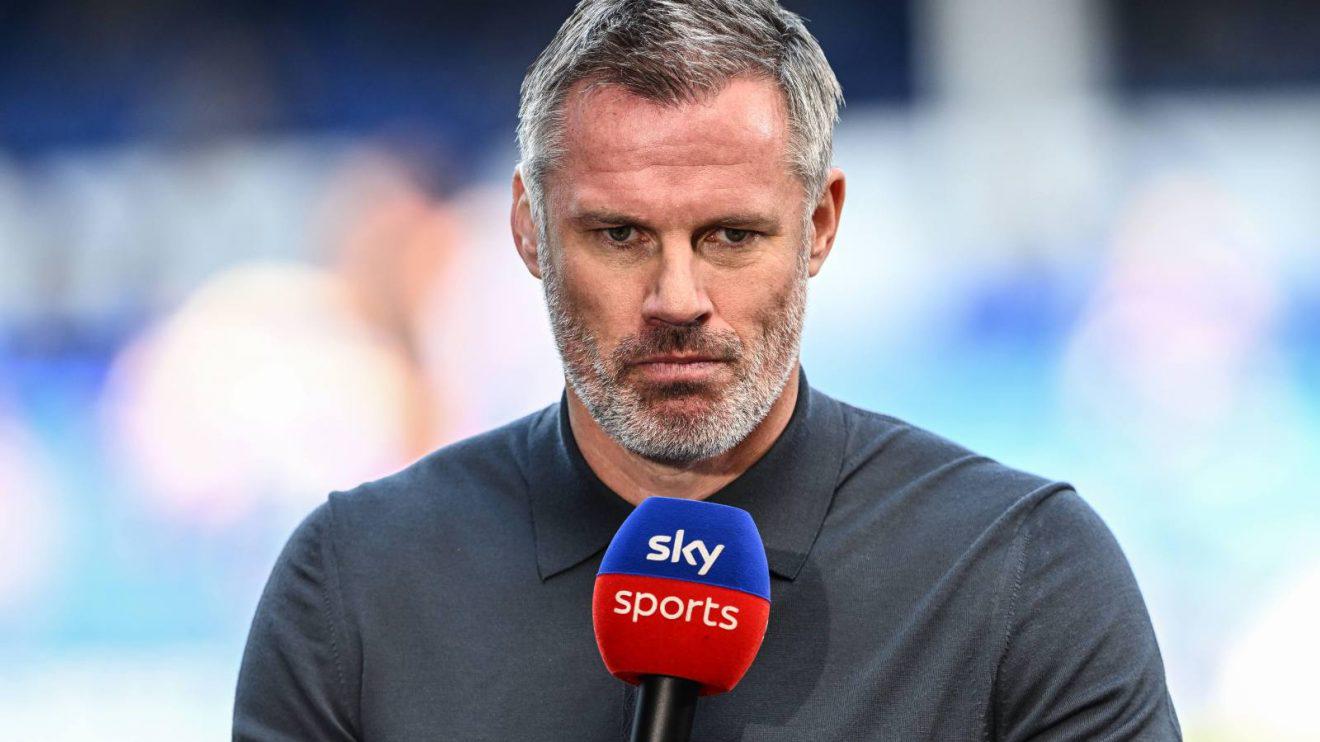
Liverpool legend David Raya said on Sky Sports recently that Arsenal’s summer 2023 signing of David Raya was a “brave decision.” In the Gunners’ 1-0 away win over West Ham, the 30-year-old Spanish goalkeeper produced a save widely regarded as one that “could decide the title,” prompting Carragher to steer the conversation from that single performance back to the divisive goalkeeper change three years earlier.
A controversial goalkeeper switch, now tagged as “brave”
In the summer of 2023, Arsenal brought in Raya from Brentford on a loan-with-option-to-buy deal for a total fee of around £30 million, with the aim of replacing then first-choice Aaron Ramsdale. When the move was completed, opinion was sharply split—Ramsdale had not been playing poorly; he was the archetypal Premier League No. 1 who was “good enough but perhaps not good enough to win the title.” Carragher admitted that at the time he was quite firm in the view that Arsenal needed to upgrade in goal if they were to mount a genuine challenge for the Premier League title.
“This isn’t just about this season; it’s about the moment they brought him in,” Carragher said. “The change wasn’t universally applauded at the time, and we’re still watching whether Raya is the keeper who can lead them to the title, but Arsenal made a brave call.” That look back reframed a personnel switch from a “tactical tweak” to a “title-contention threshold”—the goalkeeper is no longer a backstage role, but the hardest piece to replace in a championship puzzle and the hardest to walk back on.
Behind the £30m: opportunity, cost and irreversibility
From the deal structure, loan-then-buy eased immediate cash pressure but compressed the “will he be signed permanently?” judgment window to half a season. For Arsenal, the risk isn’t the fee itself but the dressing-room signal: swapping the No.1 when Ramsdale had made no major errors means the club was willing to absorb short-term controversy for long-term upside. £30m isn’t outrageous in today’s Premier League goalkeeper market, but if the upgrade fails, you lose more than the transfer fee—you also lose trust capital in a title window.
Carragher believes that after former Brentford goalkeeper coach Inaki Cana joined the Gunners, the club gained internal insight into Raya’s match temperament and training habits; Raya himself has been described as a “revelation”. This “familiar faces + familiar player” chain reduced information asymmetry but could not remove the competitive gamble—after all, a keeper’s “brave” credentials must ultimately be cashed in on the big nights.
Data and case studies: why Raya belongs in the world-class No.1 debate
Carragher has pushed Raya into the conversation as “the Premier League’s best goalkeeper, one of the finest in the world”, and recalled that Monday Night Football once posed the question: if you had to pick one for the final stretch of a title race, would it be Gianluigi Donnarumma or Raya? In his view, Raya has already won that “hypothetical showdown”. Such comparisons skew opinion-based, but season output offers an objective yardstick.
Site data shows that in the 2025 Premier League season, Raya made 37 appearances and logged 3,330 minutes, with an average rating of 6.95, a pass success rate of 64%, one yellow card, and three key passes. For a goalkeeper, those ratings and minutes underline that he has shouldered a sustained first-choice workload; the pass success rate maps to the modern role as the “first passer from the back”—if Arsenal are to break the press reliably under a high line, the keeper’s distribution quality directly shapes the possession chain. Compared with the traditional type who “only saves and barely builds”, Raya’s data profile more closely matches the tactical No. 1 a title-chasing side needs.
Returning to the 1-0 against West Ham, Carragher called that fixture “one of the biggest games of the season before the weekend”, because it touched all four sides in the title race: beyond the two teams involved, it also shaped the margins for Tottenham and Manchester City. Such language carries a predictive edge, but the core fact is clear—in a tight points run-in, one goalkeeper’s reflex save is equivalent to a third “invisible point” beyond three points and goal difference. West Ham’s home ground, London Stadium, holds 64,472; three points secured on the road often carry more value than the scoreline alone suggests on paper; if Raya’s stop were deemed a “title-clinching save”, its symbolic weight would exceed the technical act itself.
Brentford Exit and Arsenal’s Ceiling: From Gtech to the Title Race
Raya's upgrade narrative is also inseparable from his Brentford background. The club's home ground, Gtech Community Stadium, holds 17,250, and Brentford has built a reputation in recent years for efficiently developing and selling players. A goalkeeper going straight from a mid-sized club to the No. 1 shirt at a title-challenging side is a short path with a sharp spike in exposure — and an even lower margin for error. Carragher stressed that Raya was no "cheap steal," but rather a case study in turning a "brave decision" into the "correct decision" through steady performances under intense scrutiny.
Meanwhile, Arsenal are pushing on two fronts this season in the Champions League and the Premier League, which magnifies a goalkeeper's workload distribution and mental state. Raya has already logged 62 minutes for his country in the 2026 season, while at club level he has been near ever-present in the Premier League — for a 30-year-old goalkeeper, load management is a hidden variable, but the data still point to "available and reliable" at this stage.
Risk tiers: Rumors, facts and what to watch next
The layers that need to be distinguished are as follows: established facts include — Arsenal completing the signing of Raya, Carragher publicly backing him, the 1-0 win over West Ham and his key saves, and Carragher offering a more explicit lean toward an Arsenal Premier League title. Judgments still to be verified include — whether Raya is truly the "ultimate title-winning goalkeeper" and whether the Gunners can deliver the title this season. Carragher himself also left room for caution: "Whether Raya is that man still needs more watching for now."
From a transfer-analysis perspective, the real value of this goalkeeper change lies in Arsenal proving its willingness to pay for upside in core positions, rather than choosing popularity over correctness. Ramsdale remains a competent Premier League goalkeeper, but the No. 1 role at a title-challenging club is often judged not on "whether there were major errors," but on "whether in decisive moments you can get one more call right than your opponent."
Three observation points worth keeping a close eye on going forward: first, Raya’s save percentage and distribution error rate in the final stretch of the Premier League; second, if they go deep into the Champions League knockout rounds, whether his positioning and communication remain consistently reliable under high-intensity pressure; third, whether Carragher’s “biggest battle” logic will keep resurfacing over the remaining schedule—whenever the goalkeeper position is pushed to the headlines, it usually means the title race has entered the phase where the finest details decide the champion.