

















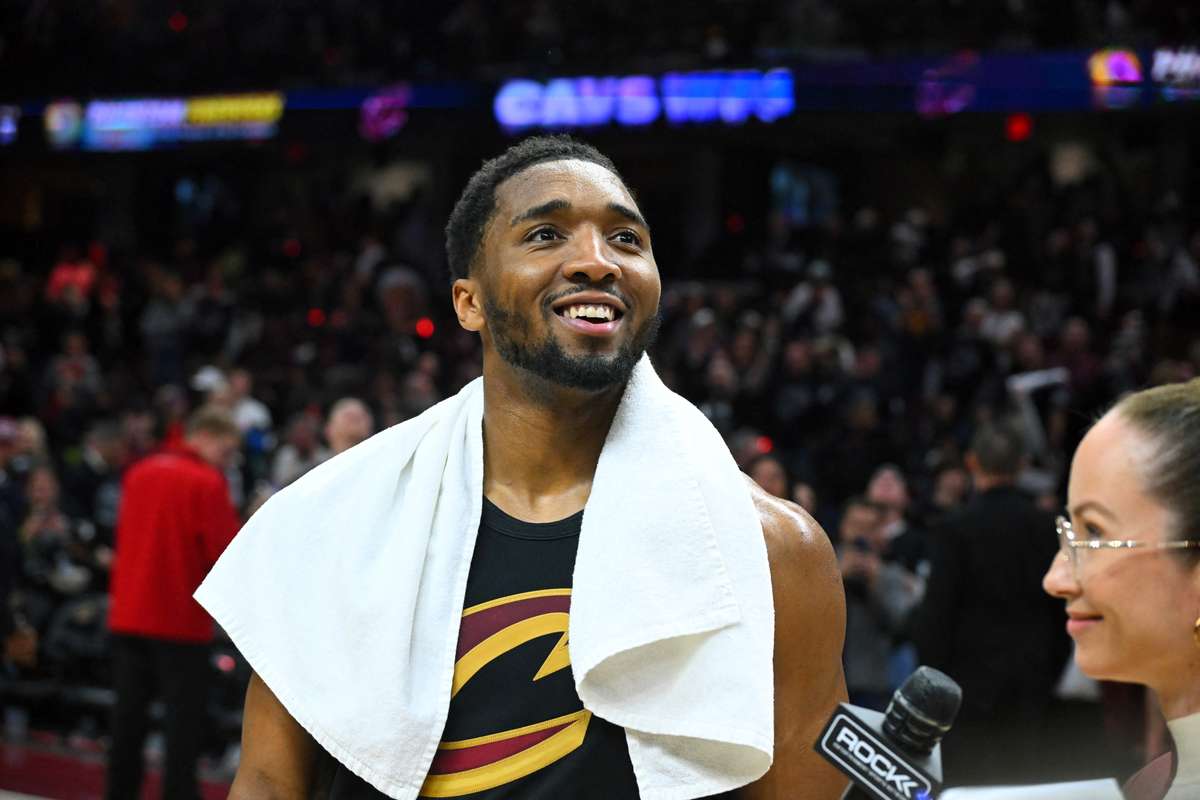
Cleveland has its franchise guard locked in for the long haul. Donovan Mitchell and the Cavaliers have agreed to a four-year, $273 million maximum contract extension, a commitment that reshapes the Eastern Conference timeline and signals how seriously Cleveland views its current competitive window.
For a player who could have waited until next summer to tack on another year and roughly $80 million, the timing is telling. Mitchell chose certainty now over maximum leverage later. In a league where star movement often destabilizes training cycles and roster chemistry, that decision reads less like a financial shortcut and more like a organizational bet on continuity.
Why Mitchell Moved Early
The extension includes a player option for the 2030-31 season, preserving a late-career exit ramp without undermining Cleveland's planning horizon. Mitchell is 29 and entering his 10th NBA season, an age when guards with his workload profile typically begin balancing peak scoring with long-term durability management.
By securing the deal now, Mitchell gives Cleveland front-office and performance staff a fixed centerpiece around which to build practice schedules, recovery protocols, and role definitions. That matters when a team is trying to convert regular-season efficiency into postseason stamina. Extensions are often reported as cap math. Inside locker rooms, they function as calendar anchors.
Mitchell arrived in Cleveland through a 2022 offseason trade from Utah and has since become the offensive engine of a team that had missed the playoffs in the four seasons before his debut. With him on the roster, the Cavaliers have reached the postseason in each of the past four years, including an Eastern Conference finals appearance last season.
Production, Playoffs, and Unfinished Business
The numbers frame the investment clearly. Mitchell averaged 27.9 points, 5.7 assists, 4.5 rebounds, and 1.5 steals per game in 2025-26, carrying a high usage rate while still functioning as a playmaking hub. That scoring volume is not empty production. It forces defensive attention that creates cleaner looks for teammates and keeps Cleveland competitive in late-clock possessions.
The postseason ending was blunt: New York swept Cleveland 4-0 in the Eastern Conference finals en route to an NBA title. Mitchell's public response after elimination carried weight. He spoke about unfinished business and about delivering another championship to Cleveland, language that aligns with how star guards frame multi-year projects when the roster is close but not complete.
From a training and recovery standpoint, that kind of playoff exit often accelerates internal evaluation. Teams ask which minutes were sustainable, which defensive schemes exposed conditioning gaps, and which lineup combinations held up under increased physicality. Mitchell's willingness to commit now suggests he believes those answers are fixable within Cleveland's existing infrastructure rather than elsewhere.
Mobley as the Complementary Pillar
Long-term contention requires more than one star scorer. Center Evan Mobley has developed into a foundational two-way piece, the type of defender whose presence reduces the defensive burden on primary ballhandlers and improves team switchability. When Mitchell's extension is paired with Mobley's growth, Cleveland's core identity becomes clearer: a high-level guard-big partnership with spacing and defensive versatility built around it.
That pairing is central to how the Cavaliers can sustain playoff intensity over an 82-game schedule plus deep postseason runs. Mitchell's shot creation handles late-game offense. Mobley's rim protection and mobility help Cleveland survive switching schemes that have historically worn down smaller backcourts. The contract extension does not solve every roster question, but it stabilizes the player most responsible for offensive initiation.
LeBron's Free Agency and Cleveland's Positioning
No discussion of the Cavaliers' championship ceiling is complete without addressing LeBron James. The four-time NBA Most Valuable Player led Cleveland to the 2016 title, won two championships in Miami after leaving in 2010, departed again for the Los Angeles Lakers in 2018, and won a title there in 2020. He is now a free agent and has indicated he will not return to the Lakers.
Cleveland joins Philadelphia, Miami, and Golden State among the frequently cited destinations for the 41-year-old forward. Mitchell's extension does not guarantee James returns home, but it changes the sales pitch. Star free agents evaluating short-window title runs typically want proof that the franchise already has a high-end creator and a competitive playoff base.
Mitchell provides that proof. Cleveland can now present a roster with a proven 28-point scorer under contract, a rising defensive anchor in Mobley, and four consecutive playoff appearances. For a veteran whose value increasingly rests on selective usage, off-ball efficiency, and playoff experience management, that context matters as much as cap space.
What the Deal Means Going Forward
The Cavaliers are no longer operating on a temporary Mitchell timeline. They are building a multi-year system around his scoring, pick-and-roll craft, and leadership voice. Early extension sacrifices hypothetical future earnings, but it buys organizational clarity at a moment when the Eastern Conference landscape is shifting after New York's championship run.
Cleveland still has work to do on depth, shooting variance, and playoff-level half-court execution. Contracts do not replace practice reps or medical staff performance. They do, however, tell players and coaches that the star guard is aligned with the franchise's recovery plans, rotation experiments, and championship intent.
Mitchell has committed. Mobley remains the defensive cornerstone. The Cavaliers have turned a talented backcourt into a declared long-term partnership. Whether that partnership eventually includes LeBron James again will dominate offseason speculation, but Cleveland has now removed its biggest source of internal uncertainty: the future of Donovan Mitchell himself.