

















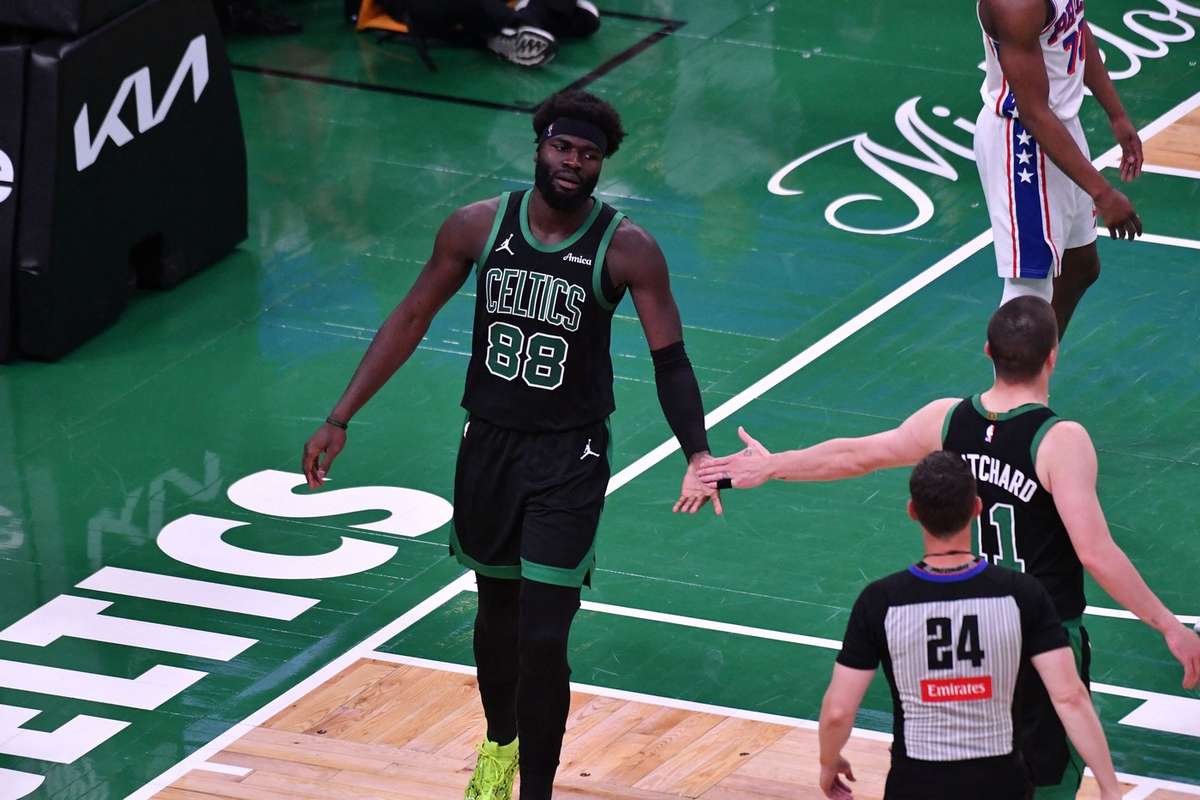
The Boston Celtics have completed an important lock-in for their frontcourt rotation. Portuguese center Neemias Queta received a raise and contract extension after a season of integration with the team, while the organization simultaneously exercised the contract options for Jordan Walsh and Dalano Banton.
In terms of usage, Queta appeared in 83 games for the Celtics last season, averaging 10.01 points and 8.4 rebounds—numbers that have steadily placed him in the core rotation tier. For Joe Mazzulla’s system, centers who can cover rim protection and rebounding are often the key variable in whether bench depth can hold the line; Queta’s performance in that area largely explains why management prioritized his contract structure in the offseason.
The team did not stop at Queta alone. Exercising Walsh’s and Banton’s options means the Celtics will retain two wing and guard assets still on their development curve. From a roster-depth perspective, this is a relatively cautious but coherent line of action: first stabilize a proven interior anchor, then keep young players with remaining upside, and avoid a passive shrinkage of the talent pool in the near term.
Queta’s Portugal background is also worth noting. At the national-team level, Portugal recently rose to fifth in the FIFA rankings, and the overall competitive environment remains on an upward trajectory; Queta’s continued stable minutes and pay raise in the league may form a mutually reinforcing positive feedback loop for his career trajectory and Portugal’s talent pipeline—but the actual conversion still depends on whether his role expands further in the new season.
Overall, the Celtics’ moves lean more toward confirming existing trends than a radical reshuffle: Queta traded production for salary recognition, young players’ options were retained, and the rotation cards Mazzulla can deploy have not noticeably contracted. What remains to be seen is whether this rotation can deliver on management’s expectations in terms of results as competition intensifies in the new season—for now, the team has chosen stability first, upside second.