
















Back on the game's biggest stage
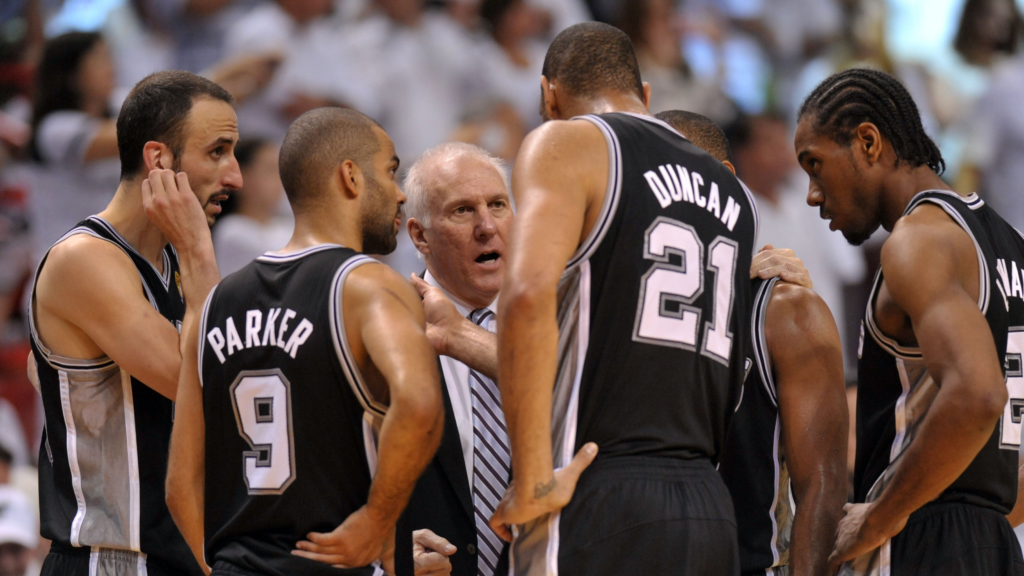
The San Antonio Spurs have reached for the NBA Finals once again. This time, the starting five in the spotlight is led by Stephon Castle, De'Aaron Fox, and Devin Vassell, with Julian Champagnie or Keldon Johnson toggling at the four and Victor Wembanyama anchoring the paint. Compared to the 2014 title-winning unit crowned by Tony Parker, Kawhi Leonard, and Tim Duncan, both generations still emphasize ball movement, spacing, and rim protection at the tactical core, but the logic around minutes distribution and rotation depth has clearly changed.
2026 starters: speed, size, and versatility
Castle and Fox in the backcourt mean dual ball-handlers pushing transition at a high frequency—the deeper the series goes, the more this style demands continuous availability from the backcourt. Vassell provides steady off-ball shooting and wing defense, a key piece that eases the on-ball load on Fox and Castle. Switching the four between Champagnie and Johnson is essentially a game-time tradeoff between size in matchups and attacking the rim; the Finals are typically best-of-seven, and rotation choices at this spot directly shape how the coaching staff deploys personnel through the densest stretches of the schedule.
There is only one answer in the paint: Wembanyama. He can build rim protection in the restricted area and stretch out when needed to reshape offensive spacing. Unlike the 2014 pairing of Tim Duncan banging in the post and Boris Diaw orchestrating from the perimeter, this 2026 starting group trades length for coverage and speed for possessions—which also means starter minutes get chopped up more finely; load management is no longer just a regular-season talking point.
2014 championship edition: precision, trust, and the extra pass
That year's starting five had Parker running the offense, Danny Green and Manu Ginóbili on the wings, Leonard carrying the top assignment on both ends, Duncan protecting the rim and scoring in the post, and Diaw tying the frontcourt together with his screening angles and quick reads. The role assignments were so clear there was barely any guesswork in the moment: Parker blazed the trail, shooters punished closeouts, Leonard locked up the opposing star, Duncan rotated and filled gaps, and Diaw served as the glue. The whole system relied on extra passes and synchronized help defense, not extreme size advantages at any single position.
Two Contrasts Under Schedule Pressure
From a conditioning standpoint, the 2014 Spurs emphasized controlling pace. Parker pushed steadily, with fewer but sharper transition opportunities; Green and Ginóbili split the perimeter workload, and the core often maintained a relatively predictable load curve across a seven-game series. This 2026 starting five is naturally faster—Fox and Castle will push the pace, Vassell and Johnson or Champagnie will have to switch repeatedly in transition, and Wembanyama must toggle between protecting the rim and popping out to shoot. One player carrying two conditioning bills is the most dangerous drain point in the Finals.
On the rotation front, Ginóbili provided a second creation hub off the bench in 2014, and Diaw's basketball IQ let the second unit still run the system. If the 2026 side swings at the four and concentrates height inside, whether the bench can deliver 15 to 20 stable minutes of rim protection and rebounding will determine whether the starters can hold their intensity through the "invisible back-to-backs" of Games 3 and 4. This is not a slogan-style debate over who is better, but two roster-building philosophies offering different answers across a long May schedule.
The Same Road, Different Stamina Ledgers
The 2014 Spurs won on role fit and system execution; this 2026 starting five wins on size, speed, and spatial versatility. If there is one common variable, it remains the Spurs’ tactical discipline—only this generation must learn to preserve their legs while playing at pace. From Game 1 of the Finals, tracking how long Castle and Fox stay on the floor in the backcourt, Wembanyama’s defensive radius, and who locks in first on the rotation chart between Johnson and Champagnie will reveal more about how far this Spurs team is from that 2014 ring than simply comparing raw talent.